Ingredient Branding vs. Material Composition in Luggage: What Really Makes a Suitcase Last
Branded components like YKK zippers and Hinomoto wheels are powerful trust signals — but they only tell part of the story. Real luggage quality comes down to grades, material composition, and engineering standards. Here's how to read beyond the label.

Walk into any luggage store and you'll see the same trust signals everywhere: "YKK zippers," "Hinomoto wheels," "Polycarbonate shell." These names carry weight because they've earned it over decades. But ingredient branding tells you who made a component, not how well it was specified or integrated.

At NORI, we think you deserve to understand both. So let's break down what ingredient branding actually means, what material composition actually determines, and why the gap between the two is where most luggage brands cut corners.
What Is Ingredient Branding in Luggage?

Ingredient branding is when a manufacturer prominently features the brand name of a component supplier as a quality signal. Think Intel Inside on a laptop, or Gore-Tex on a jacket. In luggage, the most common examples are:
- YKK zippers, a Japanese zipper manufacturer whose products are used in everything from budget backpacks to luxury trunks
- Hinomoto wheels, a Japanese wheel manufacturer known for smooth, quiet spinner systems
- Polycarbonate (PC), a material category, though it's often used as if it were a brand name in its own right
These are genuinely good signals. YKK does make high-quality zippers, Hinomoto does make excellent spinner wheels, and polycarbonate is a great material for hard-shell luggage. But here's where it gets complicated.
The Problem: Ingredient Branding Without Specification Transparency
YKK makes hundreds of zipper grades, from basic coil zippers used in fast-fashion garments to reinforced nylon coil zippers rated for thousands of open-close cycles under load. Saying "YKK zippers" tells you almost nothing about which grade or gauge was used, or whether it's appropriate for luggage thrown by airport handlers.
Similarly, Hinomoto makes a range of spinner systems. The difference between their entry-level and professional-grade wheels is significant: in materials, bearing quality, weight rating, and longevity. And polycarbonate? That's where the real story gets interesting.
Material Composition: Virgin vs. Recycled Polycarbonate
Not all polycarbonate is created equal. The two main categories you'll encounter in luggage are virgin PC and recycled PC, and they behave very differently under stress.
| Property | Virgin Polycarbonate | Recycled Polycarbonate |
|---|---|---|
| Impact resistance | High: consistent polymer chain length | Variable: depends on source and reprocessing |
| Flex fatigue | Excellent: recovers shape after compression | Moderate: can develop micro-cracks over time |
| Surface finish | Consistent, smooth, takes texture well | Can show streaking or inconsistency |
| Colour accuracy | High: dyes consistently | Lower: grey or off tones from residual colour |
| Environmental profile | Higher embodied carbon | Lower embodied carbon (if well-sourced) |
| Cost | Higher | Lower |
Most mid-range luggage brands use 100% recycled PC to hit a price point or to market environmental credentials. That's not inherently wrong, but it depends entirely on the quality of the recycled stream and how it's been reprocessed. Low-grade recycled PC is brittle: it looks fine in a showroom and fails at the carousel.
NORI's 70/30 Blend: Why We Made This Choice

After extensive material testing, we landed on a 70% virgin / 30% recycled polycarbonate blend for our shell construction. Here's the reasoning:
- Structural performance: 70% virgin PC gives us the consistent impact resistance and flex recovery we need for real-world travel abuse.
- Environmental responsibility: 30% recycled PC meaningfully reduces embodied carbon without compromising the shell's integrity, because we only use high-grade recycled streams.
- Colour consistency: The 70/30 ratio allows our signature colours to come through accurately and consistently across production runs.
We could have gone all-virgin for the best possible specs, or all-recycled to make a stronger environmental claim. We chose the blend because it's the honest answer: the place where performance and responsibility actually meet.
The Wheels Section: What "Hinomoto" Really Means

Let's talk about wheels, because this is where the ingredient branding gap is most visible. When a brand says "Hinomoto wheels," they're telling you the manufacturer. They're not telling you:
- Which Hinomoto product line (entry, mid, or professional grade)
- The bearing type and quality
- The wheel diameter (larger wheels roll more smoothly over uneven surfaces)
- The axle material and mount design
- The load rating per wheel
A professional-grade Hinomoto spinner wheel has a stainless steel axle, a sealed bearing rated for thousands of kilometres, a larger diameter for smooth rolling, and a mount design that distributes impact load away from the axle. An entry-level Hinomoto wheel shares the brand name and almost nothing else.
When we spec'd the wheels for our luggage range, we went up the Hinomoto range until we hit a product that met our durability testing criteria, not just the brand name threshold. That's a different purchasing decision, and it costs more.
Brand Name vs. What to Actually Check
Here's a practical reference table for evaluating luggage beyond the ingredient branding:
| What brands say | What to actually check |
|---|---|
| "YKK zippers" | Zipper gauge, coil type (nylon vs. metal), pull design, and whether the zipper track is reinforced at stress points |
| "Hinomoto wheels" | Wheel diameter, bearing type (sealed vs. unsealed), axle material, load rating, and mount design |
| "Polycarbonate shell" | Virgin vs. recycled ratio, wall thickness at corners, flex recovery testing, and whether the shell is a single mould or multi-piece assembly |
| "Lightweight" | Actual weight in grams, and what was removed to achieve it (wall thickness? hardware quality? corner reinforcement?) |
| "Expandable" | Whether expansion affects structural rigidity at the zipper join, and whether the expansion gusset has a reinforced track |
| "TSA-approved lock" | Lock body material (zinc alloy vs. plastic housing), shackle gauge, and whether the lock housing is recessed or exposed to impact |
How This Applies to NORI's Range

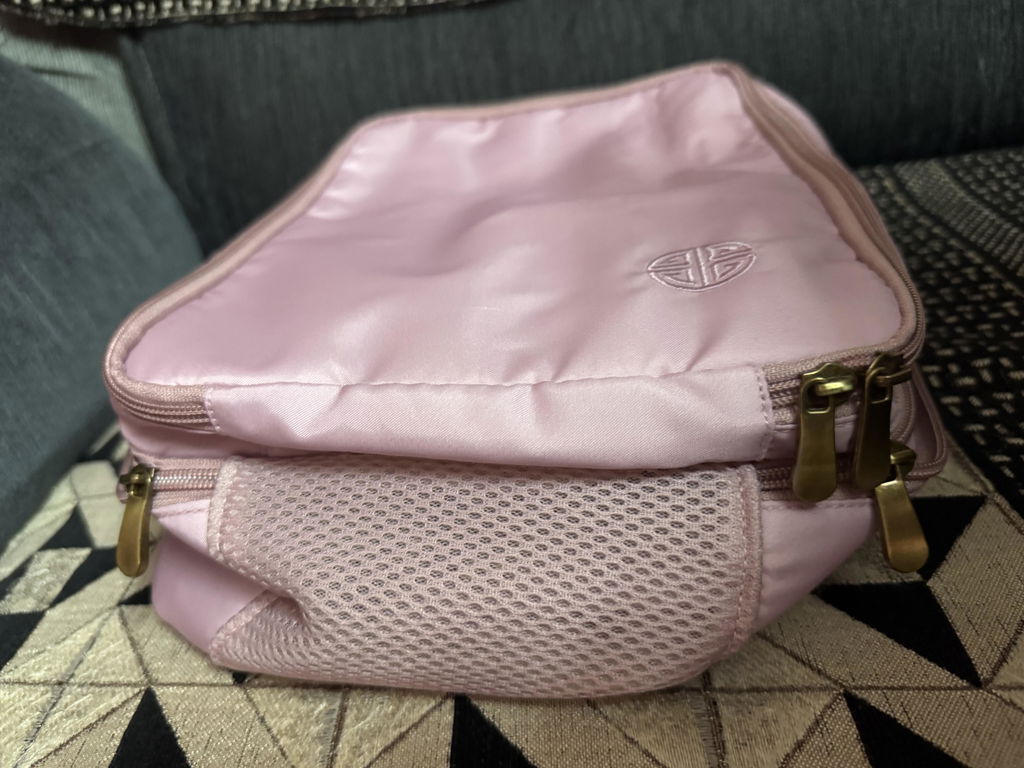
We build our luggage, travel organisers, and weekender bags to standards we can actually defend, not just ingredient names we can put on a spec sheet. That means:
- Specifying the exact grade and gauge of every YKK zipper we use, not just the brand
- Using professional-grade Hinomoto spinner systems tested to our own durability criteria
- Publishing our 70/30 PC blend composition openly, rather than hiding behind "polycarbonate"
- Backing everything with a warranty we've designed to actually be used, not to be buried in fine print
If you want to read the full terms of what we stand behind, here's our warranty policy.
The Bottom Line
Ingredient branding is a useful starting point: YKK and Hinomoto are genuinely good suppliers, and polycarbonate is genuinely the right material for hard-shell luggage. But the real quality story is in the specification: which grade, which blend, which test standard, and which engineering decisions were made when cost and performance were in tension.
The brands that are confident in their answers to those questions will publish them. The ones that aren't will lead with the brand names and hope you don't ask the follow-up.
Explore NORI's luggage collection and see what thoughtful engineering looks like.