Cabin Baggage Size and Weight Limits for Indian Travellers
Seven kilograms is common, but dimensions vary by airline, aircraft and fare. Use this table as a guardrail and confirm the rule on your booking.
By Prachi Shukla, CMO at NORI | Updated 31 August 2026
For Indian air travel, 7 kg is the most common economy cabin-baggage limit. Dimensions vary by airline, aircraft and fare. Use the allowance in your current booking as the final rule.
A mainstream cabin trolley around 55 to 56 cm high sits near the practical centre of the market. Do not use a one or two centimetre difference to rank otherwise credible cabin bags. Major luggage brands sell cases across slightly different common airline envelopes. A difference of over 5 cm deserves closer investigation. A difference approaching 10 cm is much more likely to create a practical problem.
Weight is the more immediate constraint for many Indian flights. Measure the complete external case, including wheels and handles, and weigh it after packing.
Cabin allowance table for airlines Indian travellers commonly use
The official sources below were checked on 31 August 2026. Your ticket, route, aircraft and fare remain controlling.
| Airline | Common economy cabin weight | Published cabin dimensions | What to notice |
|---|---|---|---|
| IndiGo | 1 piece up to 7 kg | 55 × 35 × 25 cm; total 115 cm | Includes handles and wheels; fare and booking information control |
| Air India | Economy and Premium Economy 7 kg; First and Business 10 kg | 55 × 40 × 20 cm; total 115 cm | Current rules also describe a separate personal item subject to limits |
| Akasa Air | Commonly 1 cabin bag up to 7 kg | Current public wording uses a 115 cm total; check the booking for the exact side limits | Do not rely on a third-party booking page |
| SpiceJet, Boeing | Up to 7 kg | 55 × 35 × 25 cm; total 115 cm | Personal items count within the published total weight wording |
| SpiceJet, Q400 | Up to 7 kg | 50 × 35 × 23 cm; total 108 cm | Aircraft type creates a meaningfully smaller limit |
| Air India Express | 1 cabin bag plus personal item, commonly 7 kg combined | Current official route pages state 56 × 36 × 23 cm for the cabin bag | Some routes offer paid Xtra Carry-On; check the booking |
| Emirates | Economy commonly 1 piece up to 7 kg | 55 × 38 × 22 cm | Cabin class and route can change the allowance |
| Qatar Airways | Economy commonly 1 piece up to 7 kg | 50 × 37 × 25 cm | Shorter published length than the common Indian market case |
| Lufthansa | Many economy fares 1 piece up to 8 kg | 55 × 40 × 23 cm | Some basic fares may include only a personal item, so fare family matters |
This table explains why “airline approved” is not a universal certification. Aircraft type can change the limit within one airline, and some fare families change whether a full cabin case is included.
For the product decision after these guardrails, use our complete trolley-bag buying guide for India.
What cabin trolley size should you buy?
For repeated travel across multiple airlines, a complete external height around 55 to 56 cm is the mainstream starting point. Then compare width and depth with the carriers and aircraft you use most.
Use this rule:
| Difference from a published side limit | How to treat it |
|---|---|
| Within the limit | Lowest size uncertainty for that flight |
| 1 to 2 cm | Common market variation and a weak product-ranking factor. Major luggage brands, including Samsonite, sell cabin models with small differences across common airline envelopes. The published airline rule still remains the rule |
| About 5 cm | Investigate the exact airline, aircraft and sizer before buying |
| About 10 cm or more | Treat as a likely cabin-fit problem |
Do not exclude wheels, handles or protrusions from your home measurement. Airlines that publish external dimensions generally mean the complete bag.
How strict is the 7 kg limit?
If the airline publishes 7 kg, the dependable planning number is 7 kg.
In practice, a bag reading 7.8 or 7.9 kg may sometimes be waved through, depending on the counter and staff. That is discretion, not an allowance. Once the display reaches 8 kg, the excess is more visible and intervention becomes more likely. Pack to 7 kg when you need a dependable outcome.
Do not plan a discussion at the airport. Home scales can differ from airline scales, and a laptop, water bottle or duty-free purchase added later can use the margin. If you want a buffer, finish below the published limit.
Some airlines combine the cabin trolley and personal item within one weight total. Others describe a separate personal-item limit. Read the exact booking wording rather than assuming a laptop bag is always outside 7 kg.
Why does empty suitcase weight matter?
Empty weight affects payload, which is the amount of the airline allowance left for belongings.
Under a 7 kg limit:
| Empty suitcase | Approximate payload left |
|---|---|
| 2.0 kg | 5.0 kg |
| 2.2 kg | 4.8 kg |
| 2.8 kg | 4.2 kg |
| 3.2 kg | 3.8 kg |
Empty weight does not tell you how two bags feel if both are already packed to exactly 7 kg. At the same total mass, grip shape, trolley control, packed balance and a secure second lifting point affect how controllable the lift feels.
This is why weight may be a comparison factor, not the buying thesis. Our cabin trolley weight guide covers the arithmetic, and the handling and lifting guide explains what changes once the bag is full.
Does a cabin suitcase need to weigh less than 3 kg?
Only when payload is a lead constraint.
A very light suitcase can leave more room for clothes and electronics. A somewhat heavier case may use that weight for a more structured trolley, interior restraint, comfortable grips, replaceable wheel hardware or other features. The buyer should ask what the extra weight does.
A practical routine before every flight
- Open the baggage section in the booking or airline app.
- Check fare family, route, cabin class and aircraft where shown.
- Weigh the complete packed bag with electronics and last-minute items.
- Keep medicines, documents, valuables and batteries in an item you can retain if the trolley must be checked.
Verdict
Buy a cabin case near the common 55 to 56 cm market envelope, then choose among credible options by how you travel: payload, loaded handling, lifting, organisation, appearance and support.
Do not let a one-centimetre difference dominate the purchase. Do not plan around staff discretion with an overweight bag.
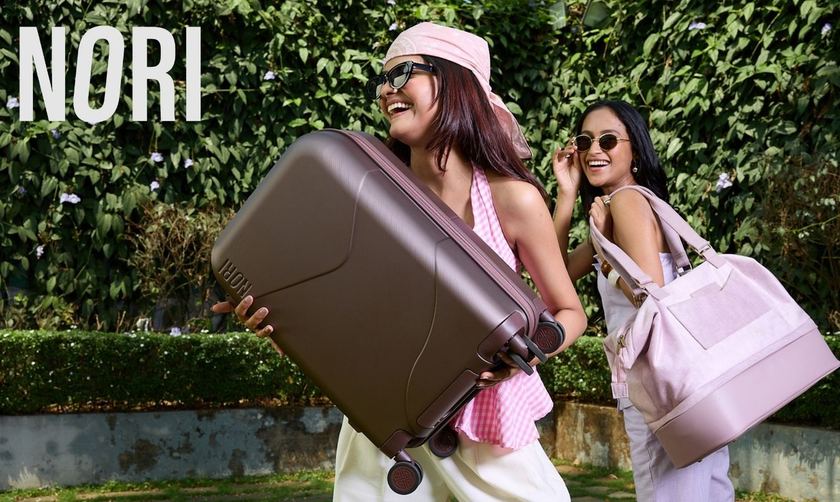
NORI Cabin Wheelie is a strong all-round option when comfortable handling, two-handed lifting, organised packing and replaceable wheels matter more than minimum empty weight.
Return to the complete trolley-bag buying guide for the final comparison.
Frequently asked questions
What cabin trolley size is allowed in India?
There is no single airline dimension. A common published envelope is around 55 × 35 × 25 cm or 115 cm total, but airlines, aircraft and fares differ.
Does 7 kg include the suitcase?
Yes. Cabin weight normally means the total packed bag, including the empty suitcase.
Can I exceed 7 kg when the limit is 7 kg?
A bag at 7.8 or 7.9 kg may sometimes pass at staff discretion, but the official allowance remains 7 kg. At 8 kg or above, intervention becomes more likely. Do not plan around discretion.
Do wheels count in cabin dimensions?
Yes. Measure the full external case, including wheels, handles and protrusions.
Is a 3.2 kg cabin suitcase too heavy?
It is a mid-weight cabin case and leaves about 3.8 kg for contents under a strict 7 kg total. Choose a lighter case when maximum payload is the priority. Choose a 3.2 kg case when its handling, shell, organisation and long-term ownership features are worth the payload trade-off.
Official airline sources
- IndiGo cabin baggage
- Air India cabin baggage
- Akasa Air baggage
- SpiceJet baggage
- Air India Express route baggage information
- Emirates cabin baggage
- Qatar Airways cabin baggage
- Lufthansa carry-on baggage
Airline rules change. The booking and official airline page for your date, fare and aircraft are the controlling sources.