Things Every Indian Woman Should Buy Before Her First International Trip (2026)
A category-by-category checklist for an Indian woman's first international trip — documents, forex, eSIM, the 100 ml rule, period kit, safety gear, and the cabin-plus-cubes-plus-tote bag system that holds up across a 15-day itinerary. NORI products are named where they earn the slot.

Your first international trip as an Indian woman asks more of you than a domestic one. Documents that must be exact. Currency in two forms. A SIM that works on landing. A packing system that survives a transit stop, a weight scale, and a hostel room. This guide runs through the checklist by category. Where a specific product earns its place, it is named. NORI's cabin, cubes, and organisers turn up in the hygiene, safety, and luggage sections because each piece is drawn for how an Indian woman actually packs a first international trip — period kit reachable at security, jewellery hidden inside the shell, footwear away from clothes, shoulders unloaded for the gate walk.
What's different about a first international trip from India
A domestic flight forgives mistakes. An international one does not. You cross three buckets of risk that rarely hit on a Delhi-to-Goa trip: paperwork (visa stamps, forex, insurance), compliance (100 ml liquid rule, TSA locks, declared electronics), and distance (no friend two hours away to drop off a charger). A first trip is not about packing less. It is about packing a system that holds up under fatigue, scrutiny, and a suitcase thrown on three conveyor belts.
1. Trip-critical: documents, money, connectivity
- Passport with at least 6 months validity beyond your return date.
- Printed and digital copies of visa, insurance, hotel confirmations, and return ticket, stored in email and in an offline folder on your phone.
- A second photo ID (Aadhaar, PAN, driving licence) kept separately from your passport.
- 2-3 extra passport-size photos. Visa-on-arrival counters still ask.
- Forex in two forms: a forex card loaded before you leave, plus around ₹5,000-₹10,000 of destination cash for the first 24 hours.
- An international debit or credit card, with your bank informed of travel dates.
- Travel insurance (medical, baggage, trip cancellation). Schengen and several other visas will not issue without it.
- An international SIM or eSIM set up before landing. Airtel, Jio, and Matrix sell packs; Airalo and other eSIM providers activate on arrival.
2. Power and tech
- A universal travel adapter with a USB-C port so a laptop charges off one plug.
- A 20,000 mAh power bank, cabin-legal. Most airlines allow under 100 Wh in cabin only.
- One charging brick with three cables, instead of three bricks.
- Noise-cancelling earphones for long-haul.
- Laptop if you work, a tablet or e-reader for the flight if you don't.
- A slim pouch for cables and chargers.
3. Health and hygiene

An Indian woman's list differs from a generic one here. Indian pharmacy staples (Crocin, Digene, ORS, Combiflam) are hard to buy abroad without a prescription, and brand names differ. Pack them.
- A medicine kit: prescription medicines in original packaging with a doctor's note, plus OTC for fever, acidity, period cramps, motion sickness, and allergies.
- A period kit for the full trip plus buffer. Pads, tampons, or a cup; pain relief; panty liners; spare underwear. A dedicated pouch keeps it discreet and quick to grab at airport security.
- The 100 ml liquids rule applies on every international flight from India. Liquids, gels, and creams must fit into a clear, resealable bag (typically up to 1 L total).
- A slim toiletry kit that separates wet items, makeup, and a toothbrush. A built-in mirror is useful on red-eyes when there is no counter.
- Sunscreen (SPF 50+), travel-size skincare, and lip balm. Long-haul cabin air is brutal on Indian skin.
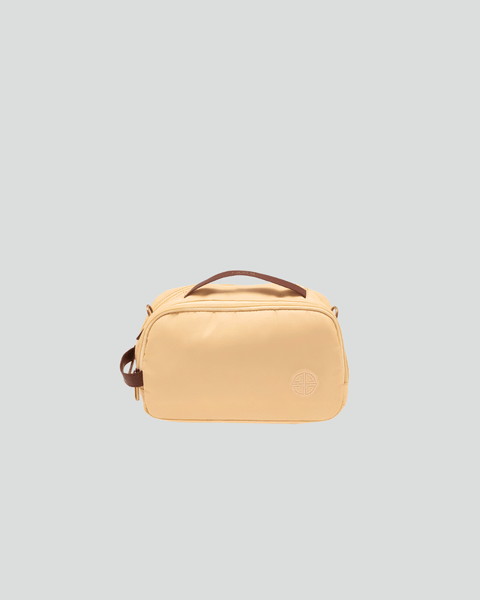
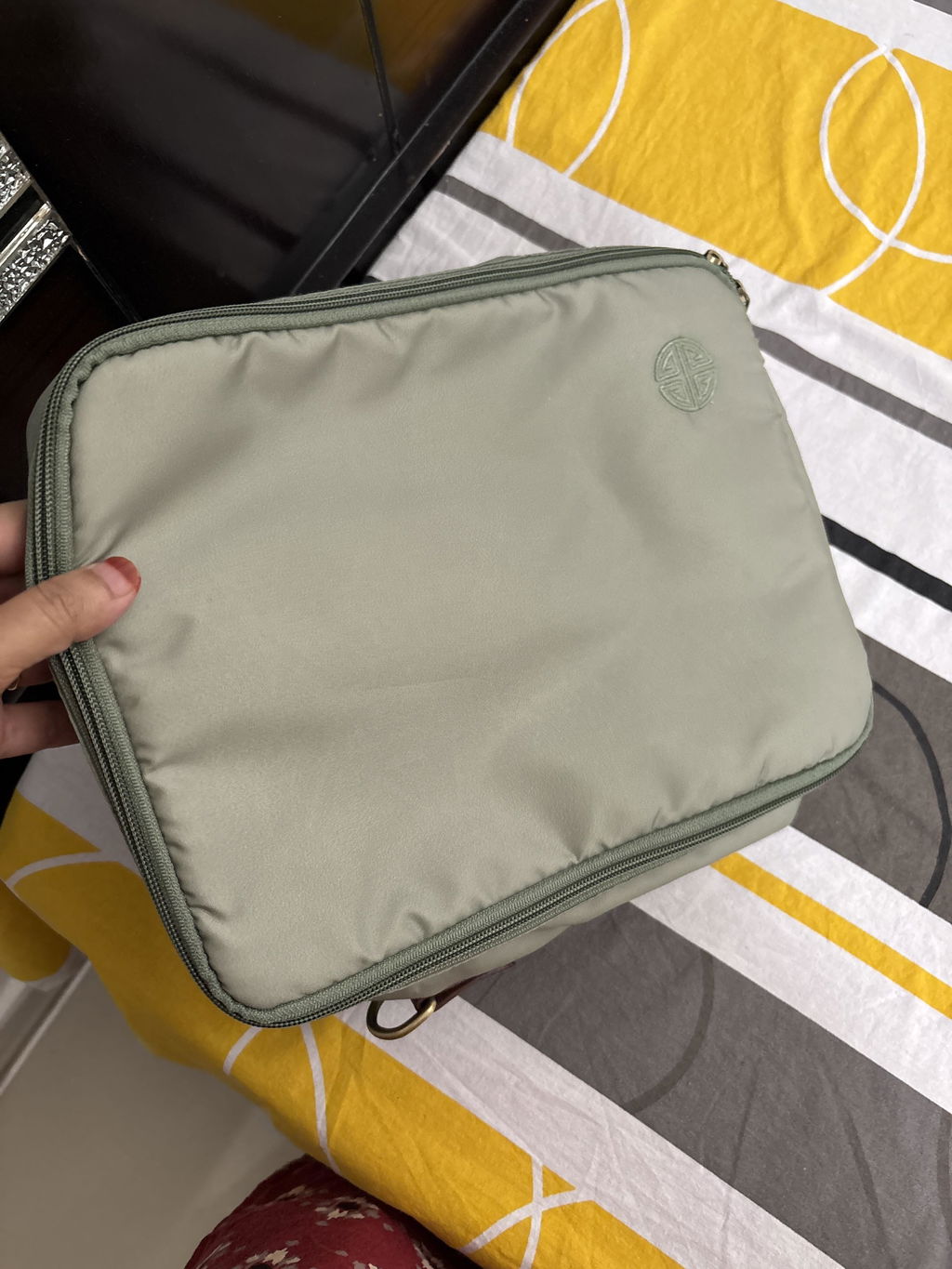
Where NORI fits here: the Glowkit is a slim makeup-and-toiletries sling with a built-in mirror, a leak-proof hygiene pocket for your toothbrush, and compartments for vials and brushes. Liquids still need to sit in a separate clear resealable bag to clear the 100 ml screening rule. The Vaulette holds up to 8 bras stacked, plus panties and a dedicated hygiene pocket. That hygiene pocket is where a period kit lives well: zipped away, reachable without unpacking the whole bag.
4. Clothing and comfort
Pack by category and by weather, not by day.
- Layers. A packable down jacket, a scarf, and one warm layer cover most itineraries.
- Comfortable walking shoes, broken in. One dressier pair. Flip-flops for hostel showers or beach days.
- Mix-and-match tops and bottoms in a neutral palette. Two pairs of jeans or trousers usually cover a week.
- One outfit you would feel confident wearing into a slightly formal space.
- For destinations with cultural dress norms (Middle East, parts of Southeast Asia), a long scarf and a cover-up that reaches below the knee.
- Sleepwear, a light robe, underwear and socks for the trip plus two spares.
- Sarees only if the trip calls for it (a wedding, a family function abroad). Folded flat, never rolled, which keeps the pleats clean and the fabric creaseless.
5. Safety and security (women-specific)
Most generic checklists undersell this category. For a solo or first-time traveller, safety is structural, not reactive.
- A cabin bag with a TSA-approved combination lock built in, not a cheap padlock. Built-in TSA-approved locks cannot be lost and are recognised by US Transportation Security Administration (TSA) inspectors; many other airport security agencies will not cut them either, though TSA acceptance is the documented case.
- A hidden interior pocket for jewellery, spare cash, and a backup card. Not on the outside of the bag.
- A decoy wallet with a small amount of local currency and an expired card. The real wallet stays in a zipped interior pocket.
- A personal alarm or whistle on your keychain.
- A door-stopper alarm for hostel rooms and budget hotels.
- A cross-body bag with a zippered top for day trips. Never an open-top tote in crowded places.
- Your itinerary shared with family back home, with hotel addresses and flight numbers.
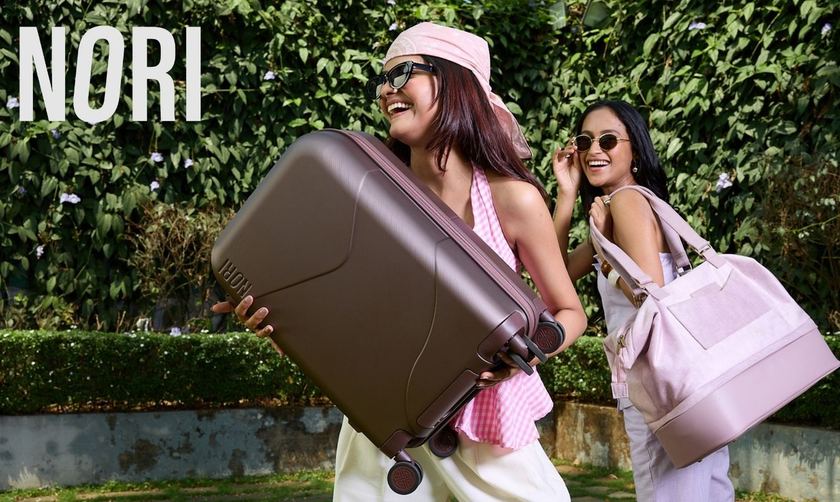
Where NORI fits here: the Cabin Wheelie is a polycarbonate cabin with a built-in TSA combination lock, YKK zips, and a weight indicator on the handle so you know the bag's weight before leaving the hotel. A hidden interior pocket inside the shell keeps jewellery and cash out of the visible compartment.
6. Food and dietary needs
The airport and the first 24 hours are the hard window.
- A reusable water bottle to fill after security.
- A small stash of Indian snacks: dry namkeen, granola bars, ORS sachets, instant chai sachets.
- If you are vegetarian, Jain, or have specific dietary needs, pre-select your airline meal and carry a card naming your restriction in the destination language for restaurants.
- Hand sanitiser and wet wipes.
- A folding fork and a small spoon if you expect to eat from takeaway boxes.
7. Admin and destination prep
Done before you leave, not on the flight.
- Offline Google Maps for the cities you are visiting.
- Your airline's app, with boarding-pass notifications enabled.
- Local transit and ride-hailing apps (Citymapper, Navitime, Grab, Uber, Bolt).
- Embassy phone numbers saved on your phone.
- A short list of cultural basics: tipping norms, dress codes for religious sites, which hand to eat with.
- Registration with MADAD, the Government of India's travel portal, if you are solo or heading to a region with an MEA advisory.
8. Bags and organisation

First-time international travellers most often get this category wrong: too many loose pouches, no system, and a suitcase that is five kilos over by the time it lands.

The honest rule: one cabin bag that meets your airline's spec, a set of packing cubes sized to your trip length, and a foldable tote for when the main bag fills up on the way back.
Your cabin bag
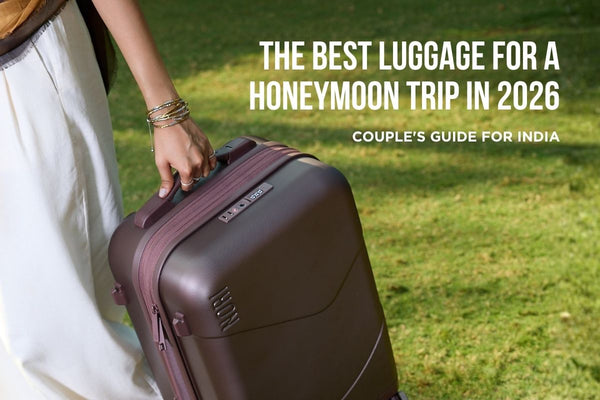
A four-wheel hardshell in a cabin size your airline allows (most international long-haul carriers allow somewhere in the 55 × 40 × 23 cm to 56 × 36 × 23 cm envelope at 7 kg — check your specific airline). A polycarbonate shell is lighter and more impact-resistant than ABS plastic. A built-in TSA lock avoids the cheap-padlock problem. A weight indicator saves the repack-at-the-counter ordeal.
NORI's Cabin Wheelie sits at ₹8,999-₹9,999, with a 70% virgin polycarbonate shell, TSA combination lock, YKK zips, pop-out washable wheels, an interior Y-strap compression system, internal hooks for last-minute airport shopping, and a 2-inch zip expander for the way back.
Your packing cubes, sized to the trip
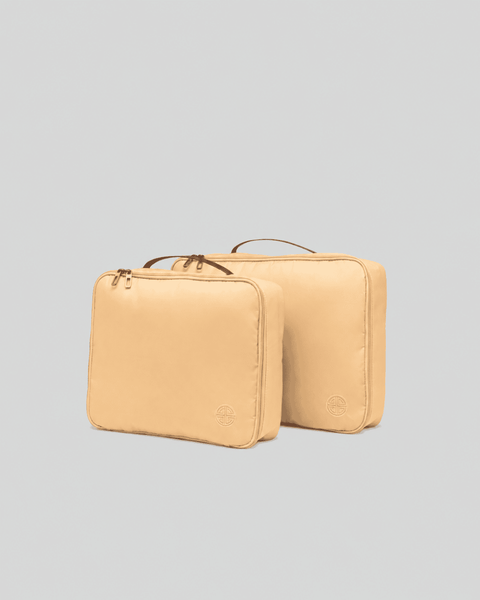
- 15-day trip → the Voyager Set of 6 (₹4,999). Max + Midi + Solemate + Glowkit + Vaulette + Dust bag. Clothes, shoes, makeup, innerwear, and soiled laundry each get their own zip — and the six pieces share the Creme / Old Money Brown / Millennial Pink / Butterscotch / Moss palette, so the inside of your cabin reads as one wardrobe, not five vendors.
- 6-8 day trip → the Explorer Set of 5 (₹3,999). Max + Midi + Solemate + Vaulette + dust bag. No Glowkit in this one; add it standalone if you need it.
- Weekend → the Overnighter Set of 4 (₹2,999). Max + Midi + Solemate + Dust bag. No Glowkit or Vaulette in this one.
- Starter → the Max & Midi Set of 2 (₹1,999). Max + Midi only. No dust bag.
The Max cube carries a product window, a top handle, and a luggage sleeve, so it stacks onto the cabin handle if your check-in tips overweight at the counter. It holds up to seven folded silk sarees and a petticoat — the one packing detail that lets a destination-wedding kit clear customs without a separate garment bag.
A foldable tote
The Dangler (₹999) clips onto the cabin handle as a 3-inch charm and unfolds into a 15-inch tote. Useful for the flight back, for a day trip, or as the extra under-seat bag most carriers permit alongside the cabin.
A note on identity on international belts
Thousands of black cabins look identical on an international belt. A colour-led bag (NORI's palette runs Old Money Brown, Millennial Pink, Butterscotch, Moss, Creme) cuts the confusion. The Cabin Wheelie, Solemate, cube sets, and Weekender can be personalized with up to 9 characters, UV-engraved permanently in 4 colours and 2 fonts, at ₹799 per piece (adds 3-4 days to dispatch). Vaulette, Glowkit, and Dangler are not personalizable. Personalized pieces are not returnable.
9. Nice-to-haves
- A silk or satin pillowcase for long-haul hair.
- A folding hairbrush.
- A small first-aid kit (band-aids, antiseptic).
- A journal. First international trips are worth remembering in handwriting.
Budget tiers: what to spend on the bag system
| Tier | Total NORI spend | What it covers |
|---|---|---|
| Essentials | Around ₹3,000 | Max & Midi Set of 2 + one standalone organiser (Vaulette ₹999 or Solemate ₹1,299). Systematizes a short trip if you already own a cabin. |
| Upgrade | Around ₹12,000 | Cabin Wheelie + Overnighter Set of 4. Cabin plus the core weekend cube set. |
| Comprehensive | Around ₹15,000 | Cabin Wheelie + Voyager Set of 6 + Dangler. Cabin, full 6-piece organiser system, foldable tote for the way back. Covers a 15-day first international trip end to end. |
Packing strategy: how the system works together
- Fold clothes flat into the Max cube (bottoms, jeans, sarees) and the Midi cube (tops, dresses). The Max cube's product window lets you spot what is inside without opening it.
- Load innerwear and your period kit into the Vaulette. This is the organiser you will grab most often in a shared hostel room.
- Load makeup and toiletries into the Glowkit, with liquids in the hygiene pocket for faster airport screening.
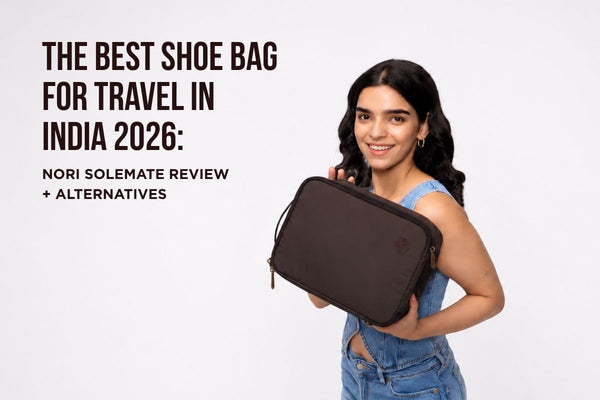
- Load footwear into the Solemate, up to four pairs with dividers. Pack flat, not standing.
- Slide the organisers into the Cabin Wheelie. Close the Y-strap compression. Use the 2-inch expander on the way back for souvenirs.
- Clip the Dangler onto the cabin handle as a backup tote. If your check-in is overweight at the counter, pull a cube out, slide it onto the cabin handle via its luggage sleeve or wear it as a sling, and redistribute without repacking on the floor.
FAQ
What is the one thing most first-time international travellers from India forget?
An international SIM or eSIM set up before landing. Free airport Wi-Fi is slow and captive-portal; without a working number you cannot book a ride, confirm a check-in, or reach your embassy in an emergency.
Do I need travel insurance for every international trip?
Yes. Schengen and several other visas legally require it. For visa-free destinations, one uninsured hospital visit can cost more than the trip.
Is a hardshell cabin better than a soft one for a first international trip?
Yes. A polycarbonate hardshell is lighter, more impact-resistant on transit belts, and easier to lock with a built-in TSA combination.
How do I manage a period on a long international flight?
Pack a dedicated pouch with pads or tampons, pain relief, panty liners, wet wipes, and a spare pair of underwear. Keep it in your cabin bag, not your check-in. The Vaulette's hygiene pocket is built for this: discreet, zipped, findable without unpacking.
Are packing cubes allowed inside a cabin bag at security?
Yes. Cubes are not restricted and speed up screening because an officer can lift a cube out instead of pulling individual items. Liquids must still be in a separate clear resealable bag under the 100 ml rule.
Do I need a foldable tote if I already have a cabin bag and a backpack?
For the way back, yes. A clip-on foldable like the Dangler weighs almost nothing closed and becomes a 15-inch tote when you need one extra bag for souvenirs. Useful for the flight back, for a day trip, or as the extra under-seat bag most carriers permit alongside the cabin.
Is a travel organiser a good gift for someone's first international trip?
Yes, one of the most practical. The Cabin Wheelie, Solemate, cube sets, and Weekender support UV-engraved name personalization (up to 9 characters, 4 colours, 2 fonts, ₹799 per piece, 3-4 days added to dispatch). Vaulette, Glowkit, and Dangler are not personalizable. Personalized pieces are not returnable.
What size cabin should I pick for international long-haul?
Most international long-haul carriers allow somewhere in the 55 × 40 × 23 cm to 56 × 36 × 23 cm envelope at 7 kg — check your specific airline. A 38L polycarbonate cabin sits inside that envelope on most routes. On strict IndiGo domestic connections (55 × 35 × 25 cm), minor cm-level variation exists across brands; enforcement is weight-first in practice and a bag in that range will board.
Related reading
By Meenakshi Vyas