Hardcase vs Softcase Luggage: Which Is Better for India (2026)
A practical 2026 guide to hardcase vs softcase luggage for Indian travel — material science (polycarbonate, PP, ABS, aluminum, ballistic nylon), monsoon-proofing, train and airport realities, and the use-case decisions that decide which format actually fits how you travel.
Neither format wins outright. Hardcases protect better, handle rain more forgivingly, and keep their shape on a check-in belt. Softcases stretch, squeeze, and open more flexibly, which matters on train platforms, inside car boots, and when you want zipped pockets on the outside. The useful question is not "which is better" in the abstract but "which is better for how you travel." This guide walks through the trade-offs, the material science underneath them, and the India-specific considerations that tip the decision.
---
When the question actually matters
Most of the time, format matters less than fit, weight, and wheels. But four scenarios genuinely decide the bag:
- Monsoon-heavy itineraries. A sealed polycarbonate shell shrugs off a ten-minute taxi dash in the rain. A water-resistant fabric shell still lets moisture creep through zippers and seams.
- Frequent check-ins on budget carriers. Belt handlers toss. Hardshells protect fragile contents (electronics, glass bottles, ceramics) more reliably.
- Train and bus travel. Softshells squeeze into overhead racks and under seats. Hardshells do not compromise.
- Mixed-terrain ground travel. Rickshaws, potholes, stone courtyards. Hardshell wheel axles take more abuse than exposed softshell corners.
If your travel is mostly airports and flat hotel floors, either format works and the decision becomes aesthetic, weight, and price.
---
Hardcase: good for, not good for
Good for: impact and compression protection; rain and humidity (monsoon especially); security at check-in (lockable zip tracks, no cuttable fabric); keeping shape inside the sizer; a cleaner airport look.
Not good for: external pockets (almost none); squeezing into awkward storage; overpacking without an expander; scratches, unless the finish is matte. Glossy shells pick up marks on the first flight, which is why premium hardcases have moved to matte textured finishes that hide scuffs and fingerprints.
---
Softcase: good for, not good for
Good for: quick-access external pockets; overpacking a couple of litres because the fabric stretches; fitting under seats, into crowded boots, or stacked on overhead racks; slightly lower weight at the same capacity; train, bus, and road-heavy itineraries.
Not good for: impact protection; rain (water-resistant fabrics slow water down, they do not stop it, and zipper ingress is the usual failure); security (puncture-resistant fabric still cuts, and external zipped compartments are easier to rifle through); holding shape (a stuffed softcase can bulge past cabin limits on one axis).
The quality gap between a ₹2,000 softcase and a ₹12,000 softcase is real and lives in the fabric grade, the corner guards, and the zipper hardware.
---
Hardcase vs Softcase at a glance
| Consideration | Hardcase | Softcase |
|---|---|---|
| Impact protection | Strong | Moderate |
| Rain resistance | Strong | Moderate |
| Weight at cabin size | 2.8 to 3.5 kg (polycarbonate) | 2.5 to 3.2 kg (mid-grade fabric) |
| External pockets | Rare | Common |
| Overpack flex | Expander only | Fabric gives a little |
| Train / bus friendliness | Moderate | Strong |
| Monsoon | Strong | Moderate |
| Security at check-in | Strong | Moderate |
| Long-term appearance | Matte holds up; gloss scuffs fast | Picks up grime, hides scratches |
| Typical premium cabin price (India, 2026) | Around ₹8,000 to ₹15,000 | Around ₹5,000 to ₹12,000 |
---
The material science underneath
The shell material is where most of the real quality difference lives.
Polycarbonate (PC)
The default premium hardcase material. Strong for its weight, flexible enough to absorb impact without cracking, takes matte finishes well.
The distinction that actually matters for a premium buyer is virgin vs recycled. Virgin polycarbonate is manufactured from fresh resin and carries the full tensile and impact-resistance profile that makes PC the material of choice. Recycled PC reuses post-industrial or post-consumer polycarbonate; it is cheaper and more sustainable, but it loses some impact resistance and long-term durability, especially across repeated flex cycles. Many brands market "100% polycarbonate" without stating the blend. A shell that is 70% virgin with 30% recycled content is a reasonable middle ground: stronger than a recycled-heavy blend, more sustainable than pure virgin.
Polypropylene (PP)
Lighter than polycarbonate at the same shell thickness. More flexible, which means better shock absorption but a softer feel some buyers read as cheap. Less common in Indian cabin luggage.
ABS
The cheapest hardshell plastic. Heavier than polycarbonate, more brittle, more likely to crack on a drop. Dominates sub-₹4,000 hardcases. Avoid for anything beyond a couple of years of real use.
Aluminum
Very durable, very heavy, very expensive. A 55 cm aluminum cabin starts well above ₹30,000. Dents rather than cracks. Niche.
Softside fabrics, tiered
- Ballistic nylon (1050D or higher): premium standard. Tear and abrasion resistant.
- Cordura: branded nylon, similar premium tier.
- High-denier polyester, ripstop weave: mid-tier, reasonable durability.
- Low-denier polyester: budget, punctures and tears easily.
Look for double-coil zippers, lockable zipper tracks, and reinforced corner guards.
Shell materials at a glance
| Material | Weight | Impact resistance | Scratch resistance | Typical price tier |
|---|---|---|---|---|
| Polycarbonate (virgin-heavy) | Light | Strong | Good (better in matte) | Premium (₹8,000+) |
| Polycarbonate (recycled-heavy) | Light | Moderate | Good | Mid (₹5,000 to ₹8,000) |
| Polypropylene | Very light | Moderate | Moderate | Mid |
| ABS | Heavier | Weak (brittle) | Moderate | Budget (under ₹4,000) |
| Aluminum | Heavy | Very strong | Shows as patina | Luxury (₹30,000+) |
---
India-specific considerations
Monsoon (roughly June to September). A polycarbonate hardshell is the more forgiving choice. The shell sheds a downpour far better than fabric, and the zipper track is the main ingress point rather than the shell itself. No mass-market cabin is submersion-waterproof. If you must use a softshell in monsoon, prefer treated fabric with sealed zipper tracks, and pack electronics in an internal dry bag.
Train and bus travel. A softshell is genuinely more comfortable on long train journeys. Upper berths on Indian Railways are cramped, and fabric compresses where a rigid shell will not fit. If most of your annual travel is ground, softside makes sense.
Domestic airlines and cabin size. IndiGo, Air India, and SpiceJet all publish 55 x 35 x 25 cm at 7 kg. Every manufacturer has minor 1 to 2 cm variation on one or two axes. Gate enforcement is weight-first in practice: a 56 cm bag almost never gets gate-checked, but a 9 kg bag on a 7 kg limit frequently does. Choose the format that matches your packing style, then manage the weight.
Mixed-terrain ground travel. Four-wheel spinners roll best on smooth floors and struggle on stone, broken pavement, and gravel. Two large in-line wheels handle rough surfaces better. Hardshell or softshell, the wheel choice matters more than the shell choice on real Indian streets.
---
Premium hardcase done right: what to look for
If hardcase is the right format, these separate a ₹8,000 bag from a ₹3,000 bag:
- A stated polycarbonate composition, ideally with the virgin vs recycled blend disclosed. Vague "100% polycarbonate" without composition detail is marketing, not specification.
- A matte textured finish, not gloss.
- YKK zippers on the main tracks. Off-brand zippers are the most common failure point on cabin luggage under three years of use.
- A TSA-approved combination lock built into the zipper.
- Replaceable wheels. If the wheels are moulded in, the bag's life is capped at the wheels' life.
- Reasonable weight. A polycarbonate cabin should sit between 2.8 and 3.5 kg empty.
- A meaningful warranty covering manufacturing defects for at least three to five years. There is no consumer repair infrastructure for luggage in India, so the warranty is functionally replacement coverage under specific conditions.
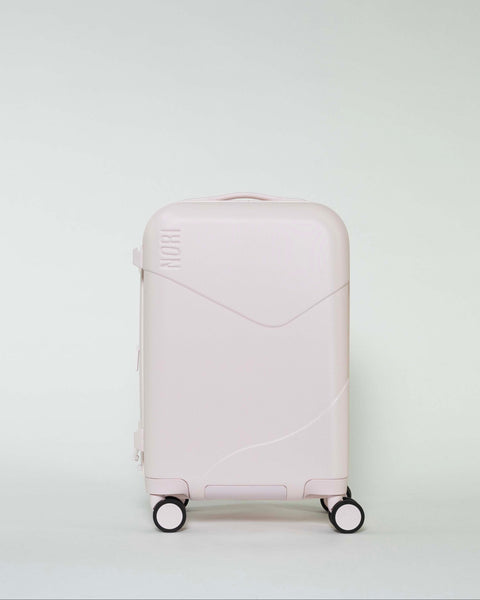
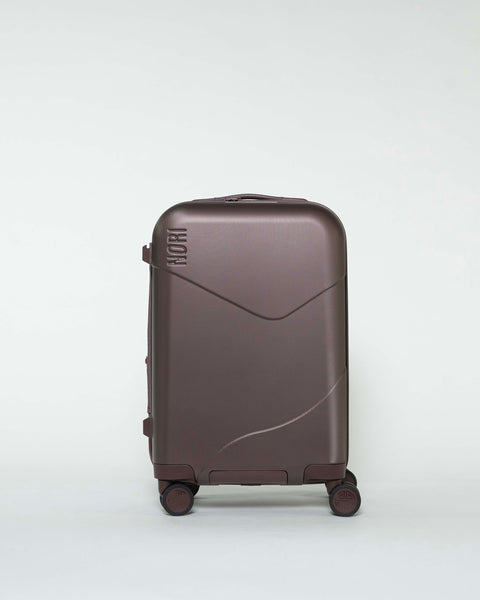
NORI's Cabin Wheelie illustrates these decisions made explicit in one cabin: a 100% polycarbonate shell (70% virgin blend, rather than the recycled-heavy blends common under ₹5,000), a matte finish that hides scuffs, YKK zippers, a built-in TSA combination lock, and pop-out washable wheels that can be replaced rather than driving a full bag replacement. It is priced at ₹8,999 for Old Money Brown and Millennial Pink, and ₹9,999 for Butterscotch. It sits in the Indian premium tier alongside Mokobara and Samsonite, below the international luxury band.
---
If you want a softcase
NORI does not make softside luggage. If your travel is train-heavy, bus-heavy, or you want external pockets, a hardshell cabin is the wrong tool and this guide should not push you toward one. Samsonite and American Tourister both have strong softside cabins at the mid tier. Two questions before buying: what is the fabric denier, and are the zipper tracks lockable.
---
Decision guide by use case
- Frequent flyer, domestic airports: hardcase. Matte polycarbonate, TSA lock, replaceable wheels.
- Frequent flyer, international long-haul: hardcase. Prioritise empty weight under 3.2 kg to leave room inside the 7 kg limit.
- Mixed flight and train, two to three trips a year: softcase if train dominates; hardcase if flight dominates. Half and half, softside is slightly more versatile.
- Destination-wedding traveller, flight plus car: hardcase for the main bag, plus a separate softside weekender for ceremony days where you pull things in and out constantly.
- Budget under ₹5,000: a mid-grade softside will outlast a cheap ABS hardcase. Cheap hardshells are false economy.
- Monsoon traveller, June to September: hardcase, without close comparison.
- Train-first, pocket-loving packer: softcase. A hardshell will feel like the wrong shape for how you move.
---
FAQ
Is hardcase or softcase better for Indian airports?
Hardcase has a slight edge on Indian carriers: better impact protection on belts, better rain resistance, and it holds shape inside the sizer. Softcase is fine if you manage weight carefully and pack electronics in an internal dry bag.
Is polycarbonate actually better than ABS?
Clearly, for real-world durability. Polycarbonate is lighter at the same thickness and absorbs impact without brittle cracking. ABS dominates sub-₹4,000 hardcases but does not hold up to repeated travel. Over ₹5,000, the shell should be polycarbonate.
What about aluminum?
Very durable, very heavy, very expensive. Dents rather than cracks, which some buyers prefer as patina and others find ugly. Starts above most Indian cabin budgets.
Can a hardcase handle Indian monsoon?
Generally yes. The shell sheds rain far better than fabric; the zipper track is the main ingress point. No mass-market cabin is submersion-waterproof, but a polycarbonate shell handles a heavy downpour.
Does this brand make a softcase cabin?
No. NORI currently makes hardside cabin luggage only. For a softside cabin, legacy softside lines from Samsonite or American Tourister cover that need well.
What's a reasonable budget for a premium hardcase cabin?
Around ₹8,000 to ₹12,000 gets a polycarbonate shell, YKK zippers, a TSA lock, and a matte finish. Below ₹5,000 is usually ABS or a recycled-heavy blend. Above ₹15,000, the jump is mostly brand premium, not material premium, until aluminum at ₹30,000 plus.
How long should a good hardcase last?
A well-built polycarbonate cabin with replaceable wheels should comfortably last five to seven years of regular use. The common failure points are wheels (replaceable on well-designed bags) and zippers (prefer YKK). The shell itself typically outlasts both.
Related reading
- Assembly vs Mokobara 2026: Which D2C Luggage Brand Is Better?
- Better Than Mokobara in 2026: An Honest Indian Luggage Comparison
By Rashika Nayak