Complete India Travel Packing Checklist 2026: What to Pack by Region, Season, and Trip Type
A category-by-category packing checklist for India in 2026 — documents, clothing, temple etiquette, train safety, regional swap-ins, and how NORI's cubes, organisers, and Cabin Wheelie keep the kit findable on the road.

India is not one trip. A weekend in Goa, a temple circuit through Tamil Nadu, a monsoon week in Kerala, and a winter run through Himachal start from the same suitcase but ask for entirely different things inside it. Add the country's documentation quirks (mandatory ID at hotel check-in, UPI as the default payment, photocopies still asked for at heritage sites) and the difference between a smooth trip and a frustrating one is almost always settled at the packing stage.
The checklist below is organised by category, with seasonal, regional, and travel-mode layers on top. Strip what you don't need; add what your destination demands.
The non-negotiables: what goes in every bag
These travel with you whether the trip is two days in Lonavala or two weeks across Rajasthan.
Documents and ID
- Government photo ID (Aadhaar, driving licence, or PAN; passport for international or remote-state travel)
- Two photocopies of your primary ID, kept separately from the original
- Printout of train PNRs, boarding passes, and hotel bookings (mobile dies, paper doesn't)
- Travel insurance card with policy number noted separately, plus soft copies in DigiLocker
Money and payments
- One debit card and one credit card, kept in different bags
- ₹2,000 to ₹3,000 in cash, broken into ₹100 and ₹50 notes for autos, prasad counters, tips
- A working UPI app (PhonePe, Google Pay, or Paytm) with the linked SIM active before you leave
Phone and tech
- Phone, charger, 10,000 mAh power bank (cabin only on flights, never check-in)
- Type C/D/M travel adapter (India runs 230V, 50Hz)
- Earphones, charging cable, and a small cable or combination lock for trains and hostels
Toiletries
- Tooth and skincare basics, deodorant, comb
- Travel-size shampoo, conditioner, and body wash refilled into 100ml bottles for cabin compliance
- Period kit (pads, tampons, or cup; supply outside metros is patchy, especially for tampons and cups)
- Razor, nail clipper, tweezers (check-in only)
Health and meds
- Personal prescription medication with the prescription itself
- Paracetamol, ibuprofen, anti-allergic, antacid, anti-diarrhoeal, ORS sachets
- Antiseptic cream, band-aids, hand sanitiser
- Mosquito repellent (DEET or citronella) for evenings, especially in coastal and wildlife regions
Sun and hydration
- SPF 30 or above, lip balm with SPF, hat, sunglasses
- A 750ml refillable bottle (tap water is not potable across most of the country; refill from filtered hotel sources or sealed bottles)
- A few water purifier tablets if you are heading to the mountains or trekking
Clothing: build it around climate, not occasion
India layers more than it dresses up. Cotton and linen carry most of the year in most of the country; merino, fleece, and a real jacket take over the moment you head north or up. Build a mix-and-match wardrobe for five to seven days; rely on laundry, not fresh outfits per day.
Base wardrobe (one week, mix-and-match):
- 5 to 7 tops in light cotton or linen, at least two with sleeves for temples and conservative areas
- 3 to 4 bottoms (one for travel days, two for sightseeing, one dressier)
- One mid-layer (light cardigan, overshirt, or thin merino) for over-air-conditioned cabs, restaurants, and trains
- One outer layer for the season (windcheater, rain shell, or down jacket)
- Sleepwear, innerwear, and socks (one pair per travel day plus two spares)
- Swimwear if the trip touches a coast, pool, or backwaters
- One dressier outfit for evenings or wedding stops
Footwear: broken-in walking shoes, easy slip-ons (essential for temples), and a nicer pair if your itinerary needs it.
Modesty add-ons: a long scarf or dupatta (doubles as shoulder cover, head cover, and warm layer on cold flights), and a maxi skirt or palazzo for places that ask for covered legs.
Seasonal and regional add-ons
India runs three rough seasons with sharp regional variation. Swap-ins by region:
| Region | Apr–Jun (Hot) | Jul–Sep (Monsoon) | Oct–Mar (Cool to cold) |
|---|---|---|---|
| Mountains: Himachal, Uttarakhand, Ladakh, Sikkim | Light layers, sun cap, SPF 50 | Quick-dry trousers, waterproof shell, dry bag | Down jacket, thermals, gloves, beanie, lip salve |
| North plains: Delhi, Rajasthan, MP, UP | Loose cotton, scarf, ORS, refillable bottle | Light cotton, compact umbrella | Sweater, light jacket for early mornings |
| Coast: Goa, Kerala, Andaman | Light cotton, swimwear, after-sun lotion | Heavy rain jacket, waterproof phone pouch, dry bag | Light layers; mornings can surprise you |
| South interior: Karnataka, Tamil Nadu, Telangana | Cotton, scarf for temples, sun hat | Quick-dry, light rain jacket | Comfortable cotton with one mid-layer |
| Northeast: Assam, Meghalaya, Arunachal | Light layers, mosquito repellent | Heavy rain shell, leech socks, dry-bag inserts | Warm fleece, gloves, thermal layer for altitude |
| Wildlife parks: Ranthambhore, Kabini, Kanha, Corbett | Earth-tone cotton (no bright colours), sun hat, binoculars | Waterproof bag, leech socks in southern parks | Down jacket and gloves for early-morning safaris |
Travel mode: what each one asks for
Flights
- Toiletries in 100ml containers inside one transparent zip pouch (cabin)
- Power bank, laptop, lithium batteries, and vapes in cabin only, never check-in
- Cabin guidance for IndiGo, Air India, and SpiceJet sits around 55 cm on the long edge and 7 kg. Weight is enforced more strictly than dimensions; a centimetre over rarely gets pulled, an overweight bag often does.
- Carry a printed boarding pass; some terminals still stamp it at security.
Trains
- A cable lock to chain your bag to the luggage hook under the seat (sleeper and AC three-tier especially)
- A shawl or stole; AC coaches can be aggressively cold overnight
- A sealed snack pouch and water for delays
- Wet wipes and tissue (washroom supply is unreliable on long-distance routes)
- A small sling for wallet, phone, and ID, worn on your body when you sleep
Buses (overnight or hill-route)
- A small daypack on your lap with valuables, a light jacket, an eye mask, and earplugs
- Motion-sickness medication for hill-route bends
- A neck pillow for sleeper-bus berths
Temple and heritage etiquette kit
Most temples and many heritage sites have specific dress rules, sometimes stricter than tourists expect.
- Covered shoulders and knees are expected at most temples; check site-specific rules ahead of visiting
- Leather (belts, wallets, watch straps) is not permitted inside Jain temples and several South Indian sites; carry a small cloth pouch to stash them in
- Shoes come off well before entry. A drawstring bag saves you from losing them at busy sites; shoe-storage counters can mean long queues
- Phones and cameras are restricted at many sanctums (Padmanabhaswamy, Tirupati, Sabarimala have specific rules; check ahead)
- Sites with prescribed dress codes: Padmanabhaswamy (mundu and angavastram for men; saree or salwar for women) and Sabarimala (pilgrims are typically expected to wear a black or blue dhoti, no leather, where applicable; check site-specific rules ahead of visiting)
- Carry a few ₹10 and ₹20 notes for prasad and shoe-storage counters
Health and safety
- Travel insurance in print and on phone, with policy number on a separate card
- Emergency contacts on a wallet card, not only saved in your phone
- Embassy or consulate contact for international travellers
- Solo or female-traveller extras: a rubber doorstop, a small whistle, a curtain pin
- A digital copy of any prescription, with a brief note in English and Hindi if you have a medical condition
Useful Indian apps
Install and sign in before you leave home; some need OTP verification on your Indian SIM.
- Transport: IRCTC Rail Connect (booking and PNR), "Where is my Train" (live status, works offline), IndiGo and Air India apps
- Cabs: Ola, Uber, Rapido (bike taxis in metros and many Tier 2 hubs)
- Maps: Google Maps with offline maps downloaded for your destination
- Payments: PhonePe, Google Pay, or Paytm covers most counters from chai stalls to fuel pumps
- Communication: WhatsApp (default for hotels and drivers), Truecaller for spam filtering
- Identity: DigiLocker for digital ID storage; accepted at most airports and trains
- Translation: Google Translate with offline language packs for the regions you are visiting
- Weather and food: IMD Mausam, Zomato, Swiggy
Packing organisation: the tools that actually do the job

Knowing what to pack is half the job; keeping it findable on the road is the other half. Cubes fix this with category-per-cube discipline: tops in one, bottoms in another, innerwear in its own pouch, shoes nowhere near your clean clothes.

NORI's organisers are sized by trip length, so you buy at the right scale rather than over-buying:
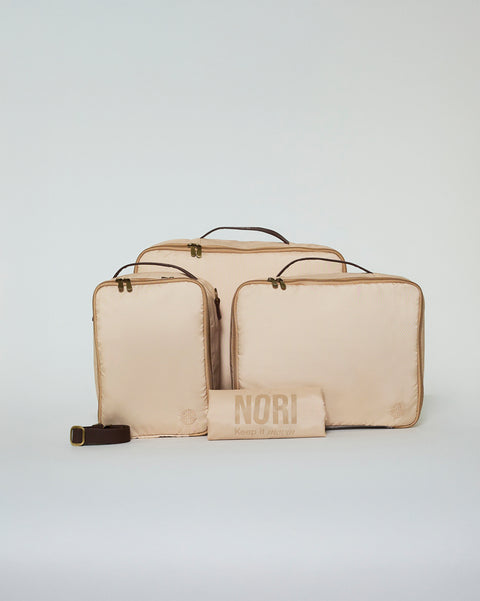
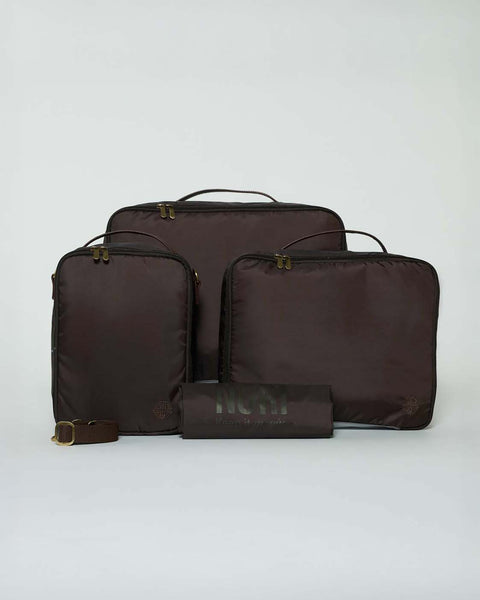
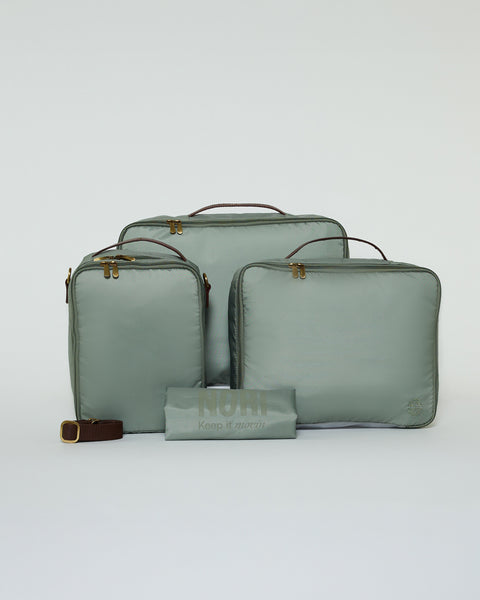
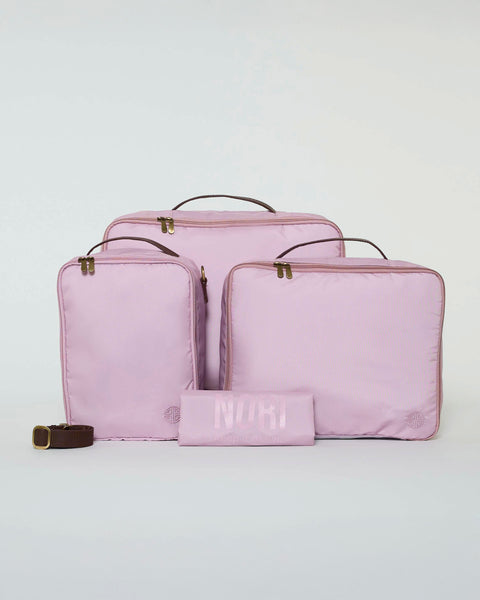
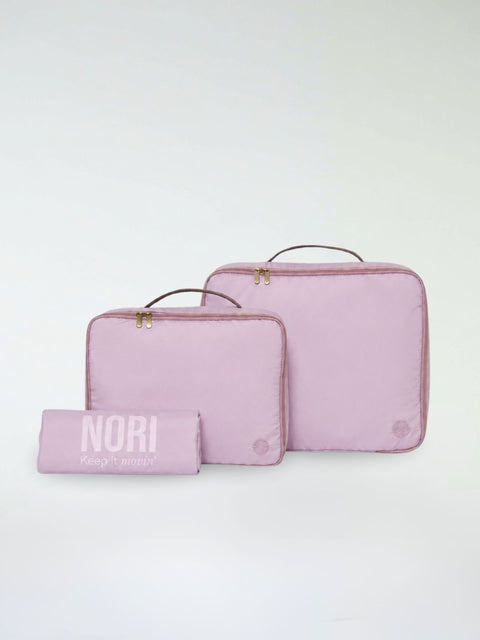
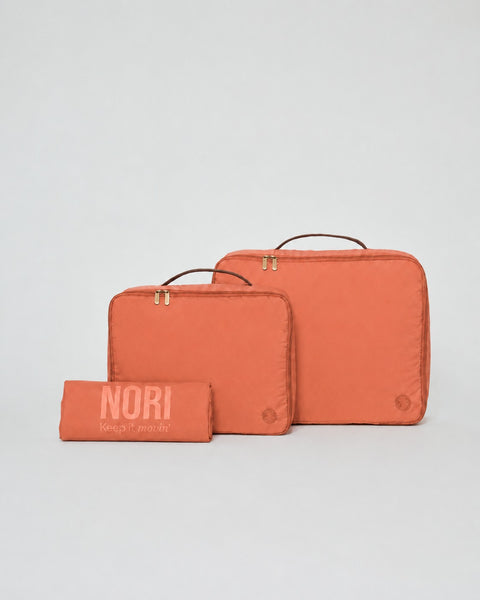
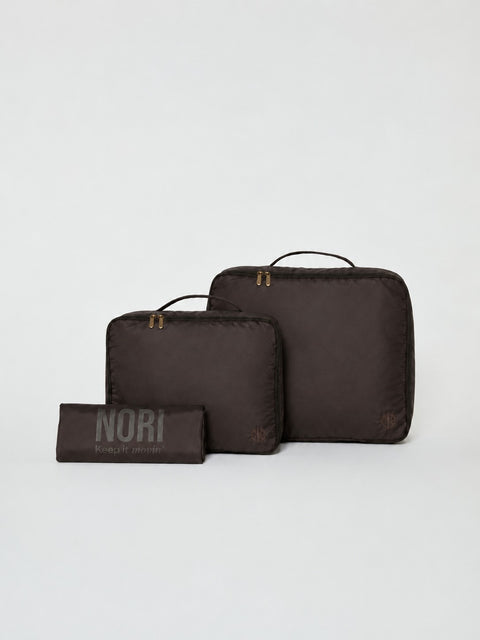
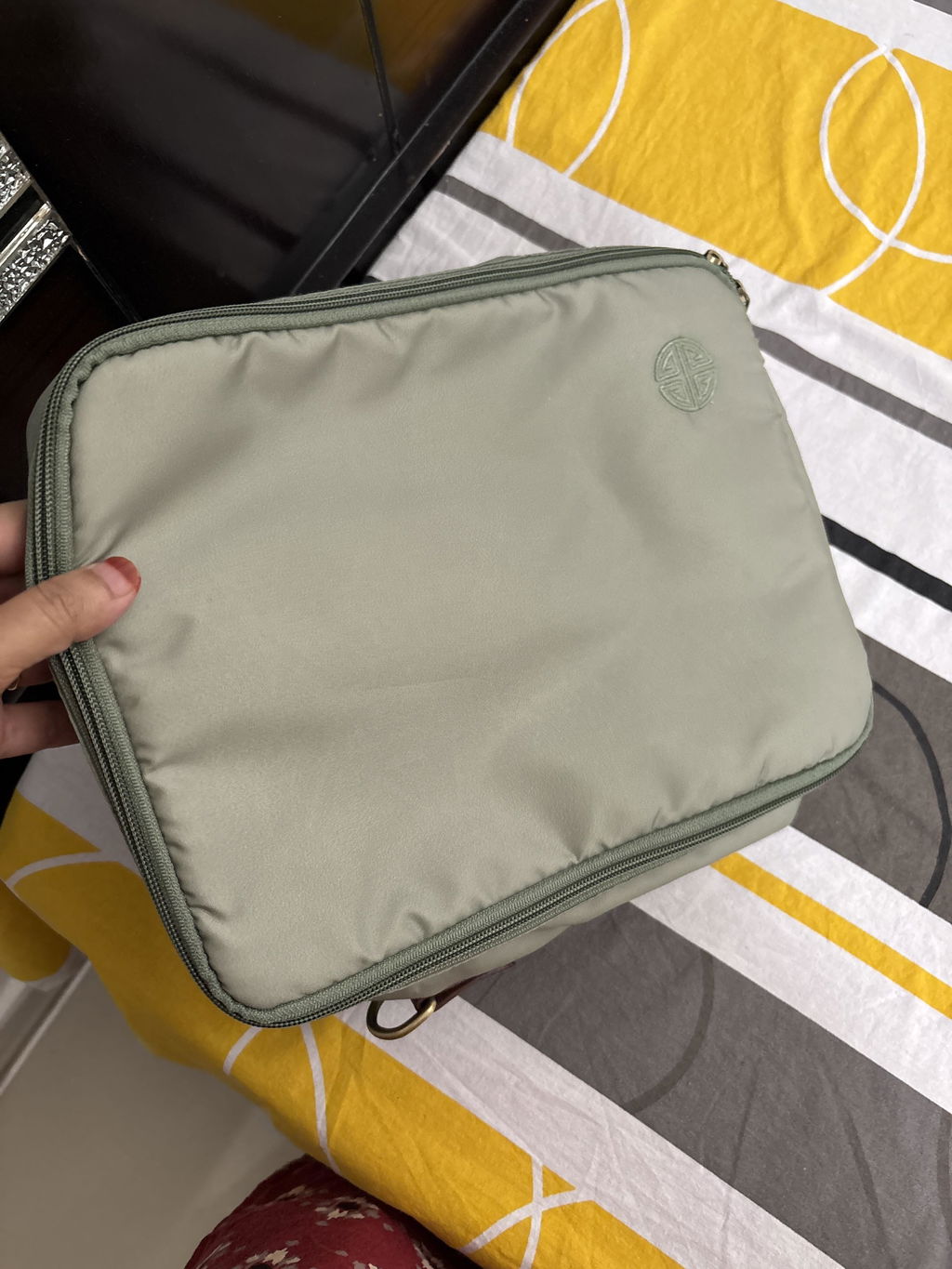
- Trips longer than a week: the Voyager Set of 6 (₹4,999) covers the full kit in one buy. It contains the Max and Midi clothing cubes, the Solemate shoe organiser, the Glowkit makeup-and-toiletries sling, the Vaulette innerwear pouch, and a dust bag that doubles as a laundry bag for the way back.
- Four-to-six-day trips: the Explorer Set of 5 (₹3,999) covers the Max and Midi clothing cubes, the Solemate shoe organiser, the Vaulette innerwear pouch, and a dust bag; the Glowkit toiletry sling is the one piece it drops.
- Weekends where shoes matter (resort, wedding, beach): the Overnighter Set of 4 (₹2,999) gives you both clothing cubes, the Solemate, and the dust bag.
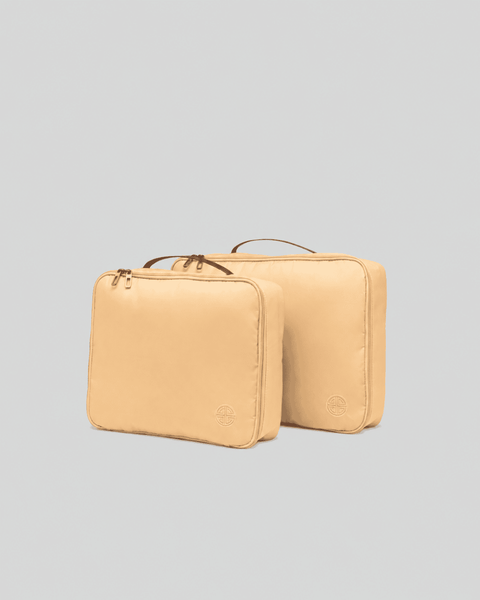
- Starter or add-on: the Max & Midi Set of 2 (₹1,999) is just the two clothing cubes.
Sarees and lehengas fold flat into the Max cube; up to seven silk sarees plus a petticoat fit when folded neatly. The cubes are water-resistant for monsoon stretches and beach proximity, with a tear-proof double lining.
For standalones (only if you are not also buying the matching set), the Solemate (₹1,299) holds up to four pairs of women's footwear with a mesh divider for breathability, the Glowkit (₹1,499) carries makeup and toiletries with a built-in mirror and a hygiene pocket, and the Vaulette (₹999) stacks up to eight bras with a hygiene pouch. Each carries independently outside the suitcase when needed. The Voyager Set of 6 already includes all three, so don't double-buy.
Cubes also solve overweight-bag panic at check-in: pull one out, sling it across your body, and the main suitcase drops a kilo or two without a floor repack.
For market runs and unexpected shopping, the NORI Dangler (₹999) clips to any bag as a charm and unfolds into a full tote.
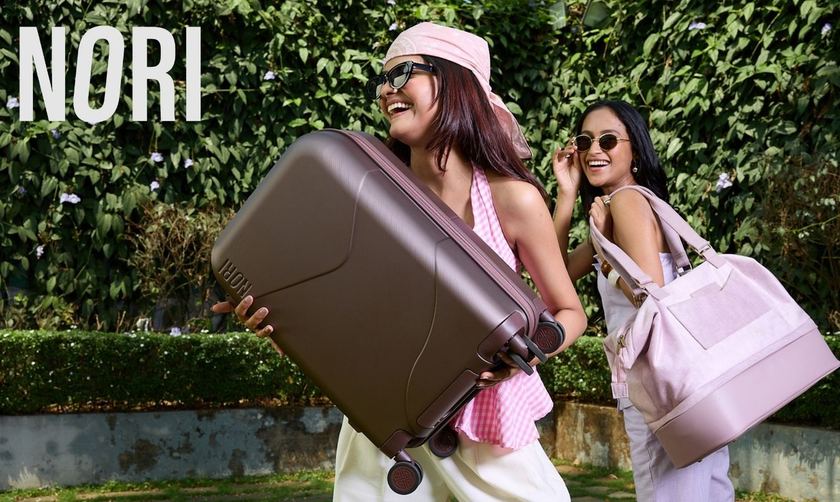
For the cabin trolley itself, the NORI Cabin Wheelie (₹8,999 in Old Money Brown and Millennial Pink, ₹9,999 in Butterscotch) ships with a built-in TSA-approved lock and YKK zips. The TSA lock matters on international transit; for Indian trains, pair it with a cable lock anyway.
The printable checklist
Print or screenshot and tick as you pack.
| Category | Item | Packed |
|---|---|---|
| Documents | Photo ID + 2 photocopies | ☐ |
| Documents | Travel insurance + emergency contact card | ☐ |
| Documents | Printed PNRs, boarding passes, hotel confirmations | ☐ |
| Money | Debit card, credit card, ₹2,000–₹3,000 cash in small notes | ☐ |
| Phone | Phone, charger, 10,000 mAh power bank, cable | ☐ |
| Phone | Type C/D/M adapter | ☐ |
| Health | Personal medication + prescription | ☐ |
| Health | Paracetamol, ORS, anti-diarrhoeal, antacid, antiseptic, band-aids | ☐ |
| Health | Hand sanitiser, mosquito repellent | ☐ |
| Sun | SPF, lip balm, hat, sunglasses | ☐ |
| Hydration | Refillable 750ml bottle | ☐ |
| Toiletries | Tooth and skin basics, period kit | ☐ |
| Clothes | 5–7 tops, 3–4 bottoms, mid-layer, outer layer | ☐ |
| Clothes | Innerwear, sleepwear, swimwear, dressier outfit | ☐ |
| Footwear | Walking shoes, slip-ons, dressier pair | ☐ |
| Modesty | Long scarf or dupatta | ☐ |
| Temple | Drawstring shoe bag, small cloth pouch for leather, small notes | ☐ |
| Trains | Cable lock, shawl, snack pouch, wet wipes | ☐ |
| Organisation | Packing cubes for clothes, shoes, innerwear, toiletries | ☐ |
| Organisation | Foldable backup tote for shopping | ☐ |
| Cabin lock | TSA-friendly combination lock | ☐ |
| Apps | DigiLocker, IRCTC, UPI app, Google Maps offline | ☐ |
FAQ
What is the cabin baggage allowance for Indian airlines?
IndiGo, Air India, and SpiceJet allow one cabin bag of around 55 × 35 × 25 cm at 7 kg, plus a small personal item. Weight is enforced more strictly than dimensions in practice. International long-haul carriers vary; check the carrier when you book.
Do I need a travel adapter in India?
Yes if you are carrying devices with non-Indian plugs. India runs 230V, 50Hz, and sockets accept Type C, D, and M plugs. Most modern phone and laptop chargers handle the voltage automatically; check the label before plugging in older devices.
Is the tap water safe to drink in India?
Treat all tap water as not potable unless filtered or boiled. Refill from filtered hotel sources, sealed bottles, or carry purifier tablets and a filter bottle for trekking.
What is acceptable temple dress in India?
Covered shoulders and knees as a baseline. Avoid sleeveless tops, shorts, and short skirts. Some sites have stricter codes (Sabarimala, Padmanabhaswamy, certain Jain temples that prohibit leather). Carry a long scarf or dupatta for sudden stops.
How should I pack sarees for travel?
Fold them flat, never roll. A dedicated cube keeps them creased the right way and protected from contact with shoes or toiletries. Up to seven silk sarees plus a petticoat fit in a Max-sized packing cube when folded neatly.
What is the safest way to lock luggage on Indian trains?
Use a cable or combination lock to chain your bag to the luggage hook under the lower berth (provided in sleeper and AC three-tier coaches). Keep valuables in a small sling worn on your body when you sleep.
Do I need vaccinations before travelling to India?
Routine vaccinations should be up to date. Hepatitis A, typhoid, and tetanus are commonly recommended for international travellers; some regions advise Japanese encephalitis or rabies depending on activity. Consult a travel-medicine clinic four to six weeks before departure.
Related reading
- Travel Shoe Organiser for Stress-Free Packing
- The 6-Cube Packing Method That Changed How I Travel
- Best Travel Essentials to Buy in India 2026 (Women's Checklist)
By Meenakshi Vyas