Best Carry-On Luggage (Trolley Bag) in India 2026: The Definitive Guide
A consumer-first guide to the best trolley bags in India, with an upfront product verdict and deeper tests for handling, wheels, materials, packing and support.

By Rashika Nayak, Co-founder and Head of Product, NORI
Updated 31 August 2026
TL;DR: Best cabin luggage in India
If you want one answer, start with the NORI Cabin Wheelie. It is the best all-round cabin in this comparison for a regular traveller who wants a suitcase that is comfortable to steer and lift, keeps packing under control, looks fashion-forward, and does not have to be discarded because one wheel wears out. It is not the lightest cabin and NORI does not yet have the service network of a decades-old luggage company.
Other products make sense when one narrower priority matters more. Samsonite Myton is the legacy-engineering and service choice. Mokobara Cabin Luggage is a familiar D2C alternative with broad colour variety, 41 L capacity and named components. American Tourister Airconic 2.0 is the low-empty-weight budget specialist. TUMI and RIMOWA enter when premium finish, ownership experience and status are part of what you want to buy.
Compare the exact products, not just the brand names
| Exact product and recent official-site price range | What it is built around | What you actually get | Choose it when / main caution |
|---|---|---|---|
| NORI Cabin Wheelie, about ₹8,100 to ₹10,000 | Comfortable regular use, fashion-forward looks and an unusually complete packing-and-ownership proposition | Cushioned four-position trolley grip, lower D-grip and 55 mm detachable wheels. NORI's finished-case validation records 25 km at a 15 kg load in upright and tilted rolling modes; the wheels click off for cleaning and compatible replacements are sold directly. The 3.2 kg 100% PC shell has a disclosed 70% virgin and 30% recycled composition, Y-compression, two-inch expansion and YKK zippers. NORI also has a deep organiser range, from Max and Midi clothing cubes to three-, four-, five- and six-piece sets | Choose it: the best all-round cabin here for regular travel under ₹10,000 when comfortable control, balanced lifting, wheels built for continued ownership, organised packing and good looks matter together. Caution: it is not the lightest, has no front laptop compartment and comes from a newer service operation |
| Samsonite Myton Spinner 55, about ₹11,800 to ₹14,800 | Mature luggage engineering, a full feature list and established service reach | 3.1 kg PC shell, ball-bearing double wheels, full-size zip expansion from 35 L to 40 L, anti-theft zipper, USB port, full dividers on both sides and a ten-year limited warranty | Choose it: the best legacy-service option around ₹12,000 to ₹15,000, especially if expansion and two fully divided sides matter. It is technically well specified and not merely a brand-name purchase. Caution: it costs more than NORI and does not give you the same direct option to buy a compatible wheel if one wears out |
| Mokobara Cabin Luggage, about ₹9,500 to ₹12,000 | Youthful D2C variety, high stated capacity and recognisable premium components | 41 L, 3.27 kg, German Makrolon PC, Hinomoto double-spinner wheels, internal compression, USB pass-through, laundry bag, six-year warranty and a separate one-year airline-damage programme under its terms. Mokobara does not publish the installed wheel diameter | Choose it: for broad colour variety, D2C familiarity, 41 L stated capacity or the current airline-damage programme. Caution: its clearest advantages are variety, capacity and that programme; it does not give you NORI's buy-a-compatible-wheel option or lower grip for lifting |
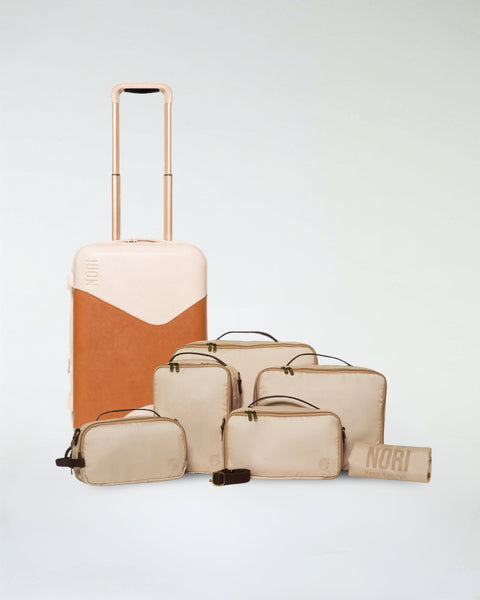
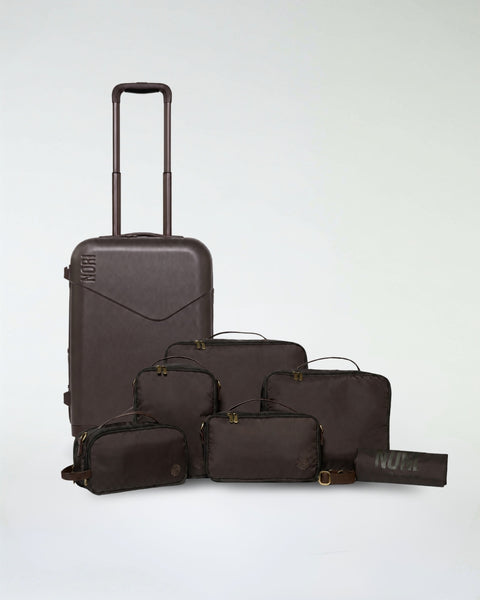
| NORI Cabin Voyager Set, about ₹11,200 to ₹15,000 | One coordinated suitcase-and-organiser purchase | The Cabin Wheelie plus the six-piece Voyager set: Max, Midi, Solemate, Vaulette, Glowkit and a dust bag. Together they separate clothes, footwear, innerwear, personal care and laundry, usually for less than buying the suitcase and full organiser set separately | Choose it: the best complete suitcase-and-packing-system buy here under ₹20,000 if you want the bag and a full organisation setup in one purchase. Caution: minimal packers may not need all six pieces; the Wheelie and smaller organiser sets are available separately |
| Mokobara Cabin Pro, about ₹13,000 to ₹22,000 | Getting a laptop and travel documents out without opening the main case | 3.65 kg, 40 L German Makrolon PC shell, Japanese Hinomoto wheels, slim hard-shell front pocket for a 15-inch laptop and small essentials, Type-A and Type-C USB ports, laundry and dust bags, and a six-year warranty | Choose it: when your laptop must travel inside the suitcase and quick front access is non-negotiable. Pass if: you already carry a laptop backpack; without that need, the 3.65 kg weight and price are harder to justify |
| American Tourister Airconic 2.0, about ₹5,900 to ₹7,900 | Keeping empty weight and price low | 2.2 kg, 36 L PP shell, double wheels, waterproof zipper, dual packing straps, complimentary packing cubes and luggage cover, and a three-year limited warranty | Choose it: when a tight 7 kg allowance and a tight budget matter most; it leaves about one kilogram more for belongings than a 3.2 kg case. Caution: it achieves that lightness with PP and a smaller capacity, so buy it for payload and price, not because it has the stronger shell or the better worn-wheel solution |
| Urban Jungle Lumolite, about ₹6,200 to ₹7,800 | Low empty weight without stepping down from PC to PP | 2.3 kg, 40 L 100% PC shell, silent dual spinner wheels, multi-height aluminium trolley, pocketed interior and a five-year manufacturing-defect warranty through the Safari group | Choose it: one of the strongest lightweight-PC values here when saving close to a kilogram matters. Caution: the interior is a simpler pockets-and-divider setup, and you do not get NORI's direct option to buy a compatible replacement wheel or the same lift-and-grip setup |
| EUME Classic Cabin, about ₹5,500 to ₹6,500 | Fitting a large number of convenience and organisation features into a mid-market price | 3 kg, 40 L PC shell, Hinomoto-based double wheels, three-stage trolley, top and side grips, Type-A and Type-C charging, SBS anti-theft zipper, full divider, adjustable compression pad, water-resistant lining, free engraving and a five-year warranty structured as two years plus three after registration | Choose it: when personalisation, built-in charging and an unusually feature-rich interior matter more than simplicity. Caution: the extra three warranty years require registration, and its advantage is the number of features rather than NORI's stronger combination of cushioned control, lower lifting grip and wheels you can replace directly |
| Assembly OdysseyPro, about ₹5,500 to ₹8,100 | Front laptop access and packing accessories at a budget price | 3 kg, 50 L 100% PC shell, easy-access compartment for a 15.6-inch laptop, double spinner wheels, three included organisers for clothes, toiletries and shoes, and a three-year international warranty | Choose it: the strongest lower-price option here if you specifically want laptop access and included packing cubes. Pass if: you do not need the front compartment; its main advantage then disappears, and you give up the more developed grip, lifting and worn-wheel answer available above |
| Safari Heritage, about ₹6,700 to ₹9,300 | A polished business look, very low weight and familiar Indian-brand support | 2.2 kg, 43 L scratch-resistant PC shell, dual wheels, multi-stop trolley, anti-theft zipper, side hooks and a divided interior with pockets and straps | Choose it: when low weight, a formal look, anti-theft zipper and familiar Safari support matter together. Caution: the exact cabin was sold out when checked and its product page did not state a warranty duration, so confirm stock and coverage before paying |
| VIP POD NXT Cabin, about ₹7,000 to ₹9,700 | Trunk-inspired styling and visible conveniences for airport waits | 3.2 kg, 47 L scratch-resistant PC shell, suspension dual wheels, cup and phone holders, wet and mesh pockets, anti-theft zipper and a three-year registered warranty that the product page says covers the frame, wheels, zippers and shell integrity | Choose it: when the cup holder, phone holder, high stated capacity or VIP support route solves a real need. Caution: those conveniences do not make it the strongest all-round choice for lifting, packing organisation or replacing a worn wheel yourself |
| EUME Aluminium Cabin, about ₹20,000 to ₹25,000 | Real aluminium construction, metal-case presence and personalisation | 4.41 kg, 45 L anodised aluminium case, eight SilentRun wheels, three-stage one-push trolley, four protective metal corners, full divider, compression pad, antimicrobial lining, free engraving and a five-year warranty structured as two years plus three after registration | Choose it: only if the aluminium look, feel and inevitable travel patina are central to what you want. Pass if: cabin payload matters; under a 7 kg limit the 4.41 kg case leaves only 2.59 kg for belongings |
| TUMI 19 Degree International Expandable 4 Wheeled Carry-On, about ₹63,000 to ₹90,000 across current variants and offers | Premium finish, recognisable design and the TUMI ownership experience | 3.56 kg, 38 L PC shell, zip expansion, retractable top and side grips, three-stage trolley, recessed dual spinner wheels, USB-C port, compression, TUMI Tracer and a five-year warranty | Choose it: because you want TUMI as well as a genuinely well-equipped suitcase; the brand, finish and ownership experience are valid parts of the purchase. Caution: the large price jump is not a proportional jump in packing space or ease of use |
| RIMOWA Original Cabin, premium/luxury pricing | An iconic aluminium object backed by serious handle, wheel, repair and service engineering | 4.3 kg, 35 L anodised aluminium case, stage-free trolley, ball-bearing Multiwheel setup with cushioned axles, adjustable Flex Divider and a lifetime guarantee covering functional damage under its terms | Choose it: because you want the RIMOWA design, status and ownership experience; the engineering is substantive too. Caution: dents and patina are part of aluminium ownership, and under a 7 kg limit the empty case leaves only 2.7 kg for belongings |
| Delsey Turenne 2.0, no verified official India price range | Lightweight premium construction with extra attention to zipper security | 2.4 kg, 37 L usable interior, recycled PC shell, SECURITECH 2 zipper, shock-absorbing double wheels, straps, net and shoe pockets, antimicrobial recycled lining and a ten-year worldwide warranty | Choose it: if you are buying in a market with official Delsey stock and support and want low weight plus a stronger zipper proposition. Caution: without a verified official India price, stock and service route, it is a credible international comparator rather than a clean India-market recommendation |
The ranges reflect recent official-site sale and listed prices checked on 31 August 2026. Promotions, colourways, stock and MRP presentation change, so verify the exact variant before paying. A wide range can indicate a seasonal discount, not a different underlying model. The NORI Cabin Voyager range is for the complete set.
The table compares the actual propositions, not just marketing adjectives. “Lightweight” is translated into kilograms. “Organised” means a named divider, restraint or organiser. “Smooth” is tied to wheel or trolley construction. Warranty years, service reach and a replacement part the owner can buy are treated as different benefits.
The wheel point is deliberately simple. Most buyers do not search for “repairable luggage.” They want wheels that stay smooth under a real load and a suitcase that does not become useless if one eventually fails. NORI publishes a 55 mm diameter and a finished-case validation of 25 km at 15 kg in upright and tilted rolling modes. Its wheels also detach for cleaning, and the owner can buy a compatible replacement outside a warranty claim. For size context, the premium Samsonite Focus Spinner 55 goes larger at an official 60 mm and adds double suspension, but was priced at £289 and was not listed on Samsonite India when checked. Samsonite diameters vary by exact model, while Mokobara names Hinomoto wheels but does not publish the installed diameter. The wheel guide explains what those numbers do and do not prove.
How to use this guide without testing 15 suitcases yourself
You do not need to reproduce our research or run a laboratory test in a store.
| Time you want to spend | What to do |
|---|---|
| 30 seconds | Use the verdict column above. Pick the specialist only if its one advantage matters more to you than the all-round choice |
| 5 minutes online | Search the exact model name with “wheel broken,” “handle stuck,” “after-sales” and “long-term review.” Read recent one-to-three-star reviews for repeated patterns, then check whether the brand answered the problem |
| 10-minute final check | With the same realistic load, raise and lower the trolley five times, roll and turn the bag, carry it, lift it with two hands, and pack the items you normally take |
This is the real order of decision-making: first choose the bag that fits the way you travel, then use dimensions, empty weight, returns and warranty as confirmation checks. Those details matter, but they should not hide whether the suitcase is comfortable to use.
For this guide, zero to two return trips a year counts as occasional use. Three or more counts as regular use. This is a practical buying threshold, not an official industry definition.
Step 1: Choose the right price and use lane
What do you get for ₹2,000 to ₹6,000?
This lane is rational for occasional travellers and fixed budgets. The strongest current choices do different jobs: uppercase Bullet for built-in packing separation, Assembly OdysseyPro for laptop access and included organisers, American Tourister Airconic 2.0 for low weight, Nasher Miles Zanzibar for a low-price PC shell, and EUME Classic for personalisation and named wheels.
Do not assume every case in this band is equally durable because it says PP or PC. Material grade, shell thickness, wheels, trolley construction and assembly quality still differ. If you choose PP, buy it from a reputable maker with a track record in engineered PP. Low-grade PP is where repeated flex, fatigue and cheaper construction become a bigger concern.
What do you get for ₹6,000 to ₹10,000?
Start with the NORI Cabin Wheelie if this is your budget. It has the broadest practical case for regular travel: comfortable trolley control, a lower grip that makes a two-hand lift easier, wheels tested for repeated rolling, direct replacement wheels, useful compression and expansion, and a more fashion-led finish.
The exceptions are clear. Choose Urban Jungle Lumolite if saving almost a kilogram matters more. Choose VIP POD if its cup and phone holders or VIP service familiarity are the deciding factors. Choose Safari Heritage mainly for low weight and an incumbent name at a strong price. Choose Mokobara Cabin Luggage for broad youthful variety, D2C familiarity and its current first-year airline-damage cover.
What do you get for ₹10,000 to ₹20,000?
Start with the NORI Cabin Voyager Set if you want the suitcase and a complete answer to packing in one purchase. The six organisers separate clothes, footwear, personal care, innerwear and laundry, and can be mixed according to the trip. Recent official-site prices place it at about ₹11,200 to ₹15,000 depending on colourway and promotion.
Choose Mokobara Cabin Pro when front laptop access is central. Choose Samsonite Myton when legacy testing and service reach matter more than included organisers or direct wheel replacement. Choose EUME Aluminium only when aluminium construction and its visual presence are the point of the purchase.
Complete this sentence before paying more: “The additional ₹5,000 buys me ______.” If the answer is specific and important, move up. If the answer is only “a more premium price,” keep the money.
What do you get above ₹20,000?
Above ₹20,000, top-end Samsonite, TUMI, RIMOWA, Louis Vuitton and other premium brands enter through a mix of proprietary construction, global service, finish, ownership experience and status.
It is legitimate to buy a TUMI because it is a TUMI, or a RIMOWA or Louis Vuitton case because the object and the name carry status. You can get a highly functional suitcase for much less, but you cannot buy the same brand signal for much less. That social and emotional value is part of the purchase.
Aluminium is not automatically better. It is heavier and will show dents or patina. Decide whether you are paying for engineering, service, luxury design or status. Any of those can be valid when you name the reason honestly.
Step 2: Decide how the bag should feel in use
Most people shortlist luggage by appearance, reviews, brand recognition, warranty and features. That is normal. The final choice should still account for what happens after the bag is packed.
The trolley handle is the control point between your body and the suitcase. The wheels decide how much correction your wrist and shoulder must make. The carry grip and lower grip decide whether a lift feels balanced. The interior determines whether packing remains organised when the bag is full.
Do you need to test every suitcase yourself?
No. We compared published specifications, warranty language, support routes and available review evidence to build the shortlists above. Use the checks below only if two products remain close and a store or eligible home trial makes comparison practical.
An external hands-on perspective points in the same direction. In a newer Hindustan Times comparison of seven cabin bags, the writer picked NORI for laptop-free travel and highlighted its detachable wheels, easier bottom-grip lift, cushioned handle, expansion and packing setup. Those observations are useful because they concern the same in-use details this guide prioritises, not only the product's styling.
The optional ten-minute confirmation
Use the same 5 to 7 kg load in every cabin candidate.
| Check | What to do | Pass | Caution |
|---|---|---|---|
| Trolley handle | Raise and lower it five times. Check that it clicks securely at each height, then roll with one hand | Easy movement, a firm click at each height and controlled steering | Sticking, a height that does not hold, excessive rattle or a grip position that strains your shoulder |
| Wheels | Push upright, pull upright, pull tilted, make a tight turn and cross one safe threshold | Starts cleanly, tracks, turns and recovers without fighting your wrist | Persistent chatter, caster flutter, hard starts or instability under load |
| Carry and lift | Hold it for 20 to 30 seconds, then practise a safe two-hand lift | No sharp pressure point and a balanced second grip | The entire load goes through one wrist or you must reach awkwardly under the shell |
| Interior | Pack a realistic trip, use compression, close it and reopen it | Items remain accessible and the closure is not under strain | Decorative pockets consume space or the zip must be forced |
Fail a bag if its handle already jams, its wheels become unstable under a normal load, or the zip and shell must be forced to close. These are repeated-use problems that a higher review average will not make comfortable later.
Are eight wheels better than four?
Not automatically. “Eight wheels” usually means twin wheels at four caster positions. Real performance depends on wheel diameter and tread, bearing or bushing quality, caster swivel, housing stiffness, mount, debris clearance, bag balance and manufacturing tolerance.
Do not choose luggage by visible wheel count alone. A good four-caster spinner can handle terminals, stations, tiles and imperfect streets. A weak two-wheel case can still drag and transmit shocks. Judge how the loaded bag starts, tracks, turns and recovers over a safe threshold.
How can you research handling online?
- Search the exact model and exact size, not just the brand.
- Read the lowest ratings first, then return to the full rating distribution.
- Search within reviews for wheel, handle, wobble, zip, crack, scuff, warranty, repair and service.
- Prefer reviews that state trip count, load, surface or months owned over an unboxing impression.
- Inspect owner videos for tracking, caster flutter, trolley play and lifting posture.
- Treat one complaint as a possible failure mode. Treat the same specific issue across independent sources as a pattern worth investigating.
- Note whether a review is verified, invited, rewarded, affiliate-funded or based on a supplied sample.
For the deeper method, use our trolley handling and lifting guide and luggage wheel guide.
Choose an interior that does real work
A useful interior restrains the main load, separates categories, gives small items a defined place and lets the case reopen without everything falling into one pile. Look for compression that works at different loads, a zipped divider, pockets with clear jobs, and expansion that gives bulky clothing, wedding wear, shoes, gifts or return-trip shopping a little more room.
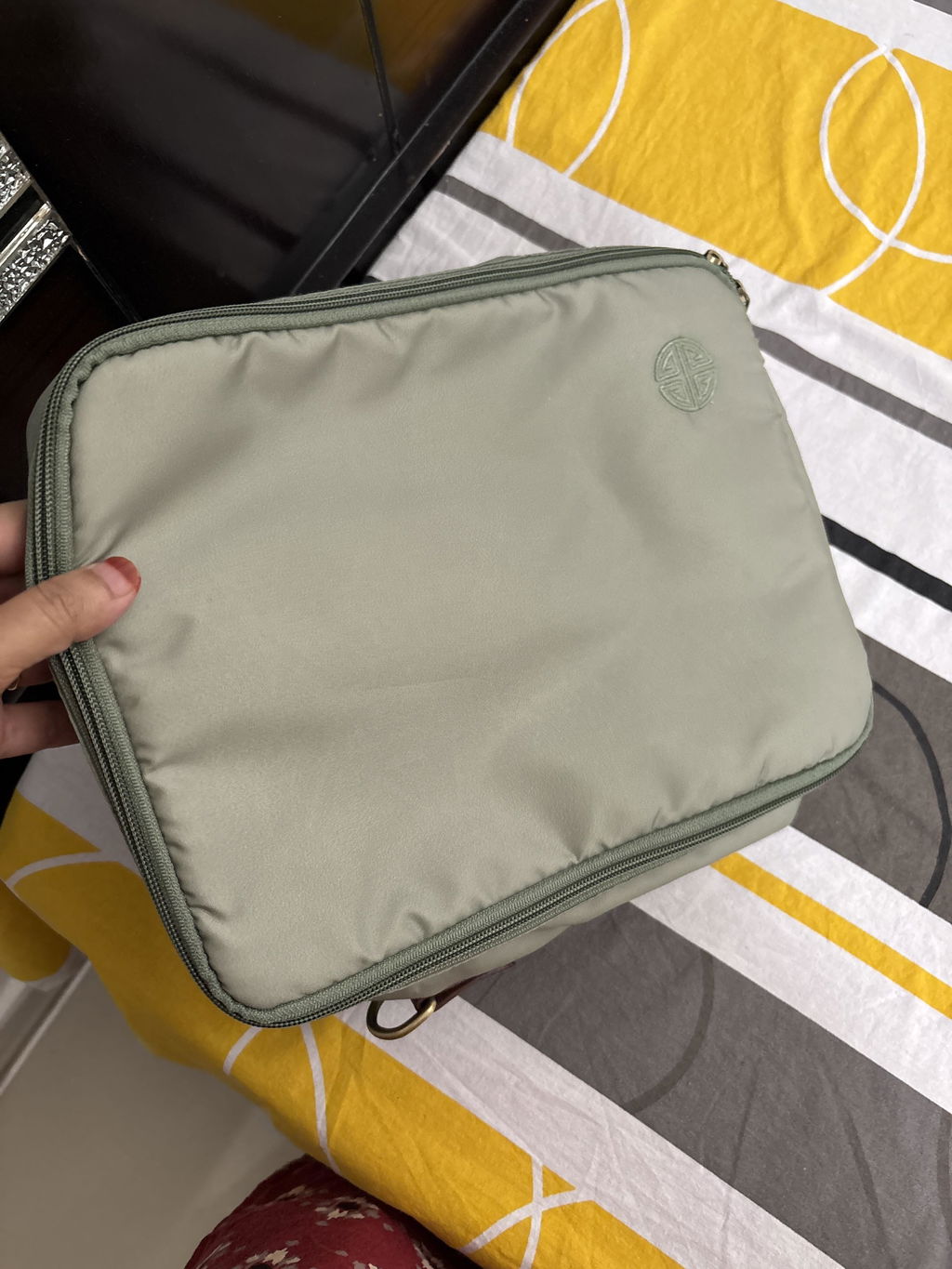
The NORI Cabin Wheelie combines Y-compression, a zipped divider, a hidden pocket and two-inch expansion. Packing organisation is a core NORI product category, not one generic cube added to a luggage listing: its travel-organiser range runs from Max and Midi clothing cubes to Solemate for footwear, Vaulette for innerwear, Glowkit for grooming and trip-specific three-, four-, five- and six-piece sets. Add only the pieces you need, or choose the Cabin Voyager Set when the discounted Wheelie-plus-six-piece combination is better value. Read the luggage interior guide for the full pack-it method and the trade-off against generic cubes.
Judge the zip as a closure, not a logo
YKK is a useful named-maker disclosure, but the chain, slider, tape, stitching, corner path, lock alignment and pressure from the packed case still determine how the closure works. NORI states YKK zippers with metal hardware. Whichever bag you choose, align the shell with your hands and do not use the sliders as clamps on an overpacked case.
Read the luggage zipper guide for zipper types, overpacking and repair.
Step 3: Choose PP or PC for the job
For regular hard-shell luggage, PC is the sensible default. It is the material to start with when you want a shell that combines stiffness, impact toughness and good shape recovery around the opening, trolley and wheel mounts. PP earns its place mainly through lower weight, lower price or a deliberately engineered construction from a maker with a strong record in PP.
| Consumer question | Polypropylene | Polycarbonate |
|---|---|---|
| Why choose it? | Lower empty weight, lower price or a named engineered PP construction | Better default for regular use when you want a strong, structured hard shell |
| Where can it struggle? | Generic PP can be less stiff and more prone to creep, warpage, stress whitening and grade-sensitive cold impact | It is denser, so the finished case may be heavier; some finishes show scuffs and strong solvents can damage it |
| What should make you trust it? | A reputable maker with a proven PP product, a named proprietary construction or relevant finished-product testing | 100% PC construction, a named resin family or disclosed virgin/recycled composition, a credible model record and any relevant finished-product testing the brand publishes |
| Practical verdict | Choose PP when weight, budget or proven engineering is the reason | Choose PC by default for frequent hard-luggage use unless a specific PP case gives you a better reason |
The reason to be cautious about generic PP is not that all PP is weak. It is that PP families behave differently. LyondellBasell's material guide distinguishes homopolymer, random copolymer and impact-copolymer performance, including major differences in cold-temperature impact. INEOS even publishes a PP grade developed specifically for luggage around stiffness, creep, low-temperature impact, shrinkage and warpage.
Samsonite Curv is the useful engineered-PP exception. It is a drawn, woven, layered and fused self-reinforced construction. Its reputation should not be transferred to an unrelated case whose product page says only “polypropylene.”
Most luggage pages will not publish a laboratory report, resin grade and shell thickness. Do not make that unrealistic disclosure standard the buying test. Give credit for specific public claims a brand is accountable for, such as 100% PC, a named resin family, a virgin/recycled composition or a named component maker, then judge how those choices come together in the finished case.
Virgin PC is a meaningful positive disclosure because, all else equal, it gives the maker a more predictable input for toughness and impact performance than an unspecified fully recycled stream. Covestro's recycled-PC processing guide says viscosity and melt temperature that are stable and predictable with virgin material can vary considerably with recycled plastics, which makes process control more important. Repeated mechanical recycling can also shorten polymer chains and reduce impact performance, as current polycarbonate recycling research explains. NORI's 100% PC shell and disclosed 70% virgin, 30% recycled composition is therefore a useful durability-consistency and transparency choice: it tells the buyer both the base polymer and how recycled content is balanced. Mokobara's “German Makrolon” claim is also meaningful because it names a Covestro PC family, even though it does not identify the exact grade.
The finished suitcase still matters. Shell thickness, rib geometry, forming, stabilisers, wheel and trolley mounts and assembly quality can make an excellent PP case beat a poor PC one. That limit does not change the starting recommendation: when two competent products disclose little beyond the polymer name, choose PC for regular use.
For cleaning, use the suitcase maker's instructions. Do not use acetone or nail-polish remover on a PC shell. Covestro's chemical-resistance guide says acetone can swell polycarbonate and that some chemicals can cause stress cracking.
Read the PP versus PC luggage guide for the full material decision.
Step 4: Use cabin rules as guardrails and understand what empty weight changes
Cabin dimensions are a guardrail, not a useful way to rank every bag
Established luggage makers design cabin cases around common airline size limits, but their published measurements are not identical. Wheels, handles and shell shape can create a difference of one or two centimetres in one direction. That small variation is not, by itself, a useful reason to call one cabin bag better than another.
A materially larger deviation deserves attention. As a practical buying rule, investigate a cabin case that is around 5 cm or more beyond the airline's limit on one side; a difference approaching 10 cm is much more likely to cause trouble with a sizer or overhead bin. This is a rule of thumb, not an airline-approved tolerance.
IndiGo currently states a maximum of 55 × 35 × 25 cm per cabin piece, a total not exceeding 115 cm, and one piece up to 7 kg. Handles and wheels are included. Check the allowance shown on your own booking before packing.
Airlines are usually stricter about weight than a small size difference
If the stated allowance is 7 kg, 7 kg is the dependable limit. Travellers may sometimes be allowed through at 7.8 or 7.9 kg, but that is staff discretion, not an extra allowance you can plan around. Once the scale shows 8 kg or more, the excess is obvious and the chance of repacking, checking the bag or paying a charge rises. If you want a predictable airport experience, pack to the published limit rather than to an assumed tolerance.
Empty weight changes payload; it does not describe lifting comfort
Under a 7 kg cabin limit, a 2.2 kg case leaves 4.8 kg for your belongings. A 3.2 kg case leaves 3.8 kg. That extra payload is the clearest reason to pay attention to empty weight.
If both cases are packed to 7 kg, however, both weigh 7 kg when you lift them. Empty weight does not make one of those equally loaded bags more comfortable to put in an overhead bin. That depends on balance, grip placement and whether you can use a secure two-hand lift instead of taking the full load through one wrist. A useful side or lower grip, including a well-positioned D-grip, can matter more to that movement than a few hundred grams of empty-shell weight.
If you pack the same contents into both bags, the lighter case will of course reduce the total you carry. Use empty weight to calculate payload or total carried weight, but do not use it as a shortcut for judging wheel quality, loaded handling, lifting ergonomics or durability.
If low empty weight is your deciding priority, use our lightweight cabin-luggage comparison. It ranks that narrower job; this guide keeps weight inside the complete purchase.
NORI's built-in weight indicator is a convenient pre-trip warning, not a certified airline scale. Use it to catch likely overpacking before you leave, then accept the airline's scale as final.
Use the current cabin baggage reference for airline-by-airline limits and the cabin trolley weight guide when payload is your lead concern.
Step 5: Buy peace of mind, not a warranty number
Most buyers do not ask whether luggage is “repairable.” They ask whether it will last and whether the brand will help when something goes wrong. Warranty, service, repair and spare availability are different answers to that trust question.
Most luggage warranties focus on manufacturing defects and exclude wear, cosmetic damage, accidents and airline handling. “Six years” or “ten years” is therefore not six or ten years of unconditional replacement.
| Brand route | If the problem is covered | If it is not covered | What you are really getting |
|---|---|---|---|
| NORI | Six-year manufacturing-defect cover. You raise the claim by WhatsApp, phone or email; NORI covers approved parts and shipping and can arrange pickup for a complex covered repair | You can ask for paid assistance, and a compatible four-wheel set is sold directly without needing a rejected claim first | You get a direct digital claim route plus a known fallback for the most exposed component. The compromise is a newer support operation than the large incumbents |
| Samsonite | The exact model's limited warranty applies after an authorised service-centre assessment. If approved, Samsonite repairs or replaces and pays to return the product | You pay to get the suitcase to the service centre; wear, abrasion, accidents and airline damage are outside the standard defect promise | You get an established physical service network and a professional assessment route, not unconditional replacement |
| TUMI | Five-year limited cover. In year one, most normal wear, airline/transit damage, repair and two-way shipping are covered; years two to five include repair for normal wear and defects under the policy | Cosmetic damage, abuse and stated exclusions remain outside cover; remedies follow TUMI's assessment | You get the broadest written first-year protection in this table and a premium repair relationship, which is part of what the higher price buys |
| Mokobara | Six years on the core Cabin line. After an approved small-part claim, Mokobara may send the part and a screwdriver for you to fit; a separate one-year airline-damage programme has its own evidence and timing rules | Wear and scuffs remain excluded; the published route does not promise that a retail store will repair every case | You get a responsive D2C claim route and useful airline-damage cover, but some remedies still require you to fit the part |
| uppercase Bullet | The exact Bullet model states 2,000 days. After accepting a manufacturing-defect claim, uppercase may send an accessory part with a fitting video; shell or zip cases can be routed to a service centre | Wear, accidents, abrasion and airline damage are excluded, and there is no normal public spare-parts shop | You get roughly five-and-a-half years of defect cover, but approval comes first and some repair work remains with you |
| Nasher Miles Zanzibar | The exact Zanzibar page states five years for shell/manufacturing defects and one year for accessories. An approved accessory issue may be handled with a part and video | The buyer pays to send a suitcase in for verification; paid spares depend on compatibility, price and stock | You get a defined model-level period and assisted parts route, not doorstep pickup or automatic replacement |
NORI gives the clearest self-serve answer for a worn or damaged wheel: replace the exposed component instead of replacing the whole suitcase. Samsonite gives the stronger legacy service-centre answer. TUMI gives unusually broad written first-year cover. Mokobara adds a narrower first-year airline-damage programme. These are different kinds of peace of mind, and the practical route matters more than the largest warranty number.
Before paying, read the policy from one real failure backward:
- What caused the problem: manufacturing defect, wear, accident, airline handling or misuse?
- Is that cause covered or excluded?
- Who decides whether it qualifies?
- Is the remedy a repair, replacement, shipped part or store credit?
- What can you do if the claim is rejected or the warranty has expired?
Read the luggage warranty guide before treating the number of years as the verdict.
How important is a TSA lock?
A TSA-recognised lock lets participating security agencies open and relock checked luggage with an authorised tool. It is useful table stakes for some international travel, but it does not make the bag theft-proof or strengthen the zip. Handling, wheels, shell, interior and support should rank above it.
Read what a TSA lock does and does not do if international check-in use is relevant to you.
The final checklist
- Set your price band before comparing features.
- Decide cabin, check-in, or both.
- Count your normal return trips in a year.
- Use the operating airline's dimensions as a guardrail and investigate material oversize.
- Use empty weight to calculate payload, not as a proxy for handling or lifting comfort.
- Prefer PC for frequent hard-luggage use unless the PP construction gives you a specific reason to trust it.
- Judge the loaded wheels and trolley, not “four versus eight” in isolation.
- Check how the bag is carried and lifted, not only how it rolls.
- Pack the interior once if a trial or store visit makes that practical.
- Read warranty exclusions before warranty years.
- Identify the claim, service, paid-repair or spare-parts route.
- Write down one reason to buy and one compromise for every finalist.
Frequently asked questions
Which are the best trolley bag brands in India?
Start with the NORI Cabin Wheelie for the strongest all-round mix of comfortable regular-use handling, PC construction, organised packing, fashion-forward looks and wheels that can be bought and replaced. Compare Samsonite for legacy engineering and service reach, Mokobara for youthful D2C variety and front-access options, and American Tourister or Urban Jungle when low empty weight leads. uppercase, Nasher Miles, Assembly, VIP, Safari and EUME have narrower budget or feature-led options. TUMI, RIMOWA and top-end Samsonite belong in the premium or status-led comparison. The exact model still matters more than a brand-only ranking.
For the broader brand consideration set rather than exact cabin models, use our best Indian luggage brands guide.
What should I look for when buying a trolley bag?
Set your budget and decide whether you need cabin or check-in luggage. Within those boundaries, buy for how the suitcase will be used: how it rolls and turns when loaded, how comfortably you can lift it, how well the interior works for your packing, and whether it suits your trip frequency and style. Use dimensions, packed-weight allowance, return terms, warranty exclusions and support as confirmation or disqualification checks, not as the main reason to rank one bag above another. If two products remain close, compare them with the same realistic load.
How much should I spend on a trolley bag in India?
₹2,000 to ₹6,000 can be rational for occasional use. ₹6,000 to ₹10,000 is a strong cabin band for regular travellers who value better use details. From ₹10,000 to ₹20,000, pay more for a specific improvement such as complete packing organisation, published engineering, service reach or laptop access. Above ₹20,000, luxury and status may be part of the value.
Are eight wheels better than four wheels?
Not automatically. Eight visible wheels usually means twin wheels at four caster positions. Loaded performance depends on the tread, bearings, swivel, housing, mount, balance and tolerances together. Test upright, tilted, turning and across one safe threshold if practical.
Which is better for luggage, PP or PC?
PC is the safer default for regular hard-luggage use when two products disclose little beyond the material name. PP is a sensible choice when lower weight, lower price or a proven engineered construction is the reason. A good PP case can beat a poor PC case, so the finished product still matters.
Does a luggage warranty cover broken wheels?
Sometimes, but usually only if the brand accepts the failure as a manufacturing defect. Wear, impact, accidents and airline damage are commonly excluded. Check whether paid repair or compatible spares are available if the warranty does not apply.
What trolley bag should I use for a 7 kg cabin allowance?
Choose between two real priorities: maximum payload or easier regular use. A 2.2 kg cabin such as Airconic leaves about 4.8 kg for belongings under a 7 kg limit, so it is the better answer when every kilogram of packing space matters. The 3.2 kg NORI Cabin Wheelie leaves about 3.8 kg, but that finished weight includes a 100% PC shell, cushioned four-position trolley grip, lower D-grip, 55 mm replaceable wheels, compression, expansion and a built-in overpacking warning. Once either suitcase weighs 7 kg, both weigh 7 kg; balance, grip and wheel control decide which one is easier to move and lift. Choose the lighter case for payload, and NORI when the way the packed case handles is the stronger priority. Check the exact allowance on your booking before travel.
What suitcase should I use for a 20 kg check-in allowance?
“20 kg luggage” describes the packed allowance, not one universal suitcase size. A medium case around 65 to 69 cm is a practical starting point for many trips because a very large case is easier to overpack. Confirm the airline's piece, dimension and weight rules, then subtract the suitcase's empty weight from the allowance.
Is the NORI Cabin Wheelie a good choice?
Yes. The NORI Cabin Wheelie is the best all-round choice in this comparison for a regular traveller under ₹10,000 who wants comfortable trolley control, a lower D-grip for two-hand lifting, smooth 55 mm wheels that can be replaced, PC construction, useful packing organisation, expansion, a packed-weight warning and fashion-forward looks. It also belongs in the ₹10,000 to ₹20,000 lane through the discounted Cabin Voyager Set, while the organiser range lets you add a smaller Max-and-Midi-led set separately.
It is not the best fit if your only priority is the lowest price, the lowest empty weight, a front laptop compartment, a decades-old service network or luxury status.
Use the cabin allowance shown on your booking rather than relying only on a “20-inch cabin” label.
You can browse NORI luggage here.